Friday, December 29, 2023

Lost Realms by Thomas Williams puzzling over value: style


Lost Realms by Thomas Williams (William Collins, 2022) 

Warning: Opinionating in progress.


Lost Realms  is a book with much to recommend it. The basic approach, ‘histories’ rather than ‘history’ is the only one that can deal with the ways in which Roman Britain became something else.  

What intrigues me most is two aspects of William’s style. He can write very well; evoke the landscape of post Roman Britain; negotiate the tangle of evidence and contending theories that characterise the period in clear and unambiguous prose. But so much of the book relies on the reader not paying attention. 


The following is a characteristic example of general style, and it illustrates two problems. The author is remembering climbing the steps to Tintagel as a child:


It felt endless that stairway-like the steps that ascended to the pass of Cirith Ungol from the Morgul Vale in Tolkien’s The Two Towers. (p.146)


You could delete everything from the dash to the full stop and the information would be conveyed successfully: 


It felt endless, that stairway.


It’s a common experience, especially for children. The author can rely on most readers  to understand his point (even if his intrusion of the memory into the narrative adds nothing especially relevant to the subject at hand). What follows the dash is superfluous in terms of information and is an attempt at ‘style’ but it's a strange thing to find in a history book. 


If this were a personal memoire of reading Tolkien, then the comparison would be at home if it were reversed. ‘When I read about the steps that ascended to the pass of Cirith Ungol from the Morgul Vale in Tolkien’s The Two Towers I remembered the steps that lead to Tintagel.’ p.146


This would be the normal movement, illuminating the fictional by comparing it with a real, repeatable experience that is not unique to the individual. Williams consistently goes the opposite way, trying to illuminate the historical by comparing it to the fictional. (More about this in the next post.)


But what happens to the reader (me, for example) who has no idea what Morgul Vale or Cirith Ungol are? That question points to an underlying assumption, and an impossible one: the assumption that the reader shares the writer’s fictional knowledge and his attitudes. Williams’ range of reference is eclectic: The Wicker Man, the Shining, Star Wars, the complete works of Tolkien. But no concession is being made to the reader. At one point rather than rewrite an unimportant but obviously obscure reference, he would rather add a footnote to explain his explanation. 


…that will embody an oddly retro-futuristic aesthetic, like the neo-Byzantine fantasies of the Trigon Empire…(p178)


The overall impression is that the author is not making an effort to communicate, rather, he is putting on a performance, and the performance assumes the reader shares his references, his fascination with his own memories, and his opinions. Which effectively means the Model Reader of this book can only be a model Thomas Williams. 


Sometimes this positioning is insidious: an anecdote will be introduced as ‘comic’ or ‘blackly comic’ rather than simply left to stand alone. Sometimes it’s unintentionally funny.


The story of Uther and Ygerna is, for modern readers, an uncomfortable read.


Stop. Which modern readers? All modern readers? Are we expected to believe that those who watched Vikings and Game of Thrones, or read Fifty Shades of Grey are disturbed by this? Some modern readers? Students in universities who are told to feel uncomfortable? 


But our author confesses:


I remember finding it troubling as a child and it stills leaves me feeling queasy. Not I think because the tale is in itself unusually unsettling (there are many, far more violent sentiments expressed in older Welsh and English poetry) but more for the horny relish with which Geoffrey tells it and the enormous appeal he clearly expected it to have for its intended audience…p146


I must admit I laughed aloud at this. The thought of Geoffrey writing 12th century erotica is almost as funny as thinking that what he wrote could have aroused your average clerical reader or titillated his ‘aristocratic’ listeners.  


Leaving aside the thought that horny relish sounds like a strange kind of novelty pickle, I wonder how many people reading this have read Geoffrey, or how recently or how carefully Williams has? If you’re reading this and have a copy of Geoffrey handy, stop now and read what Geoffrey wrote about Uther in Tintagel. It’s only a few lines. Does this sound like ‘horny relish’?  Then go back and read Vortigern’s meeting with Rowena: it’s not long either. Then remember what Geoffrey did in his day job. 'Deceived' is not a positive term.


But most people won’t stop and read Geoffrey. They won’t wonder which readers are disturbed, or whether horny relish is an accurate description. It sounds good. It sticks in the memory. The book, like many recent ones, relies on the reader never stopping to consider what the words on the page mean. The glib references aren’t meant to be examined, or even given any thought. The author is entertaining himself and scattering his references with no real interest in ‘meaning’. If the reader isn't meant to think too deeply about this; did the author? 


This might sound like I’m being over critical about trivial detail, but it leads to a discussion of how the material is presented and understood, for which see next post. 


Thursday, December 21, 2023

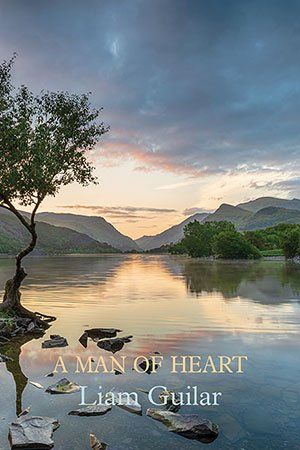
Review of A Man of Heart by Liam Guilar


A Man of Heart is reviewed in the December print edition of Quadrant. The text of the review is on line, you can read it by clicking on the link at the bottom of the page, which will open a new window. 


Heart of the Island Nation

 ..'.a celebration of long-neglected narrative traditions – an epic for an era which ironizes everything, a tribute to this once and future island and its stoically enduring people.'

...Guilar tells of Vortigern, king (flca. 425-450) of the newly independent Britons who, according to traditional historiography, used the Saxon leaders Hengist and Horsa to protect his kingdom against Picts and Scots, and granted them land. Vortigern has been mythologised, but here feels eminently real, thanks to the poet’s sweeping historical sense, and convincingly gritty detail of how those long-lost landscapes must have looked, how those nation-building lives might really have felt.

...We open in shadows suited to descending ‘Dark Ages’, as kingdoms fade into view, and a strategic marriage is being considered sadly in a crepuscular columned room:

“There was never enough light. / Even in summer, shade / and shadows contour brightness. / At night, torches and lamps / shiver the edge of sight.”

A Romano-British matron is thinking of her daughter courted by unrefined “men of power” – regrettably necessary allies in a province turned upside down, where the uncivilized hold the sword-hand, and sophisticates overnight have only squatters’ rights.   

You can read the rest of the review by clicking on the link. It will take you to the author's page. 

Review of a Man of Heart

Liam Guilar - A Man of Heart

Wednesday, December 6, 2023

Michael Alexander.


Sad News. I heard today that Michael Alexander died last month. 

A translator of Old English, writer of one of the most judicious books on Ezra Pound, historian of literature and a fine poet in his own right. His interests ranged widely. There's a good book on Medievalism, a fine history of English Literature, and a book on Shakespeare that stands out amongst the flood of books on that subject as being both thoughtful and thought provoking. 

I bought this copy of Beowulf in 1976. I liked the cover. I knew nothing about Old English. 

But I was hooked. There was something strange and intriguing and I wanted to know what the original sounded like. It was one of the main reasons I studied medieval literature.  

Many years later, banging my head against Pound's Cantos I found his book The Poetic Achievement of Ezra Pound. He'd met the man, dedicated his Old English Translations to him 'without irony'. But his discussion of Pound's Seafarer is the most level headed I've read. 

Even more years later, when Pn Review published my version of 'Wulf and Eadwacer' in the same edition Michael was remembering his meeting with Pound,  I thanked the editor and told him that I owed  my interest in Medieval Literature to Michael's translations. The email was passed on, a correspondence followed. 

I was the awkward school boy staring at that Penguin book in W.H.Smith's in Coventry trying not to write fan letters.  He was generous with his time. Stories about meeting Pound, and David Jones. Links in the chain. 

When he read A Presentment of Englishry he was complimentary, but he also wrote; 'It wasn't all plague rape and pillage'. He was right. There's a poem in A Man of Heart called 'These are the good old days #1' which begins 'There must have been sunshine./  Good days when a man unbent from his work/ and smiled to see the healthy children play'. Originally 'For Michael Alexander' I removed the dedication, thinking the piece wasn't good enough. I wish I hadn't. 

It's strange the debts I owe to strangers. Sometimes I'm given the chance to thank them.


Safe travelling.


Tuesday, October 10, 2023

Review of Taliesin Origins by Dr. Gwilym Morris-Baird


Taliesin Origins by Dr. Gwilym Morris-Baird

Wales can boast one of the finest literary traditions in the world and in the poetic tradition of Wales, Taliesin is a vital figure. There are, intriguingly, two ‘Taliesins’. 


The first is an historical character. A Briton who (?Probably?) was a court bard in ‘The Old North’,  during the sixth century AD. He composed praise poems for ‘kings’ like Urien Rheged and was well-rewarded for his songs. 


There is a second Taliesin, who is a character in a legendary tale. He benefits from a concoction in a magic cauldron and having been pursued by its irate owner, through several animal transformations, is finally eaten as a grain and born again to become the greatest of poets.


In the long Welsh tradition, it seems that ‘being Taliesin’ became a persona that later bards could adopt. The poems were memorised, recited and passed on. The poems associated with this practice tend to be 'visionary' and for a modern reader often baffling.  Poems like 'Armes 

Prydein' or 'Cad Goddeu' remain obscure even after they have been 'explained'. 


Scholars have tried to separate the ‘Historic’ from the ‘Legendary poems’ in an attempt to see what the historical poet may have composed. Not everyone agrees on the selection but they do agree the Historic ones are few. They do however contain gems like 'Marwnat Owein';  the great lament for Owein Rheged which is not only a great lament, but a master class in metrical finesse. 


There’s not much that can be said about the Historical Figure, though the book gives a good introduction both to him and his context. Morus-Baird’s focus is the story or stories that survive about the legendary Taliesin. In an eloquently written exploration of the myth, he reads the symbolism of the stories to establish links to other stories, and to older and wider themes in a broadly ‘Celtic’ history. 


He knows that interpretation, especially interpretation of myth, legend and folklore is an art, not a science, but he is too well-informed and too sane to drift off into the twinkly-eyed excesses of others. 


Reading discussions of medieval literature and folk lore, it often feels like being a passenger on a tour bus in a foreign country. Too often the tour bus arrives at a junction and the obvious progression is to go right. You can see the Hill of Tara which is where you thought you were going. The bus goes left. 


This happens far too often, and the reader becomes mired in the kind of arguments that C.S.Lewis mocked as: ‘Apollo was a Sun God. He rode in a chariot. Cuchulainn rides in a chariot. Therefore Cuchulainn was a sun god.” At which point you get off the bus, hike back to the intersection and wait for someone going in the right direction.


This never happened for me with Morus-Baird’s book. The tour guide is eloquent, entertaining, and obviously very well-informed. When the argument arrives at the intersection, he may go left, but you will be glad he did, because he will take you to places you hadn’t considered and while objections will occur to any reader, he always stays within the grounds of possibility and is very explicit about when he is speculating or stretching a point. 


The writing navigates a territory whose boundaries are mapped by the meticulous linguistic arguments of cautious scholar and the wishful thinking of the ill-informed. As such it’s very valuable not least because it's readable. He cares about his subject. Part of his argument is that the Taliesin tradition is built into the Welsh Language, and therefore its diffusion and perpetuation are essential parts of a thriving Welsh culture. 


This might sound like niche marketing, but the ‘Taliesin tradition’ has a lot to offer anyone; especially those interested in folklore, or interested in one of Medieval Europe’s great poets.  

Hopefully before the next Robert Graves blunders around in that tradition, he or she will have read this book.  


(My only criticism of this book is its lack of an index.) 

Wednesday, September 27, 2023

Review of David McCooey's 'The Book of Falling'


Three reasons why you should read David McCooey’s poetry.

(This review originally appeared in The Brazen Head, September 2023)

David McCooey, The Book of Falling. Perth, Western Australia, Upswell Publishing, 2023.  109 pages. $24.99 (AUS)

The Book of Falling is David McCooey’s fifth collection of poems, and if nothing else, gives the lie to the invidious myth that people who work on academic writing programs can’t write.

1) He’s very good at what he does. His poetry evokes Bunting’s praise of Scarlatti:


It is now time to consider how Domenico Scarlatti

condensed so much music into so few bars

with never a crabbed turn or congested cadence

never a boast or a see-here, 


Every well-chosen word in its place, and each word doing the necessary work. In the first four lines of the collection, a sense of vague but threatening menace is swiftly evoked:


The unseen night creatures -scaled and feathered 

for their occult ceremonies-rasp and call outside

in the dark beyond the half dark that

surrounds this marbled, half lit house

(Questions of Travel)  


This deft verbal economy is a feature of the wide variety of poems that appear in The Book of Falling and plays against often surprising content. The first three poems are conventional poetic monologues as though the poet were setting out his stall and proving his ability. At the same time the subjects are anything but conventional. Elizabeth Bishop packs to travel; Sylvia Plath looks at her life on her 80th Birthday; Marilyn Munroe divines the future and amongst other things,  ‘…see[s] who will be forgotten first/ Queen Elizabeth, Molly Bloom, or me.’ 

These are followed by word play, short sequences about family, a group of satires and elegies, poems about urban life, as well as ‘Three Photo Poems.’ The latter a new genre to me: three sequences which juxtapose very short texts (one of the sequences is made up of ‘found poems’) and photographs.  

The juxtaposition of pictures, either of the mundane, as in the sequence about bathrooms, or the family photographs which on closer inspection look anything but mundane, with short pieces of text, lead to the second reason you should read the book.

2) Variety. 

On a first reading you can never tell what’s going to be on the next page. This is a defining characteristic of the other two books of McCooey’s poetry I have read and unusual in single author collections where formal and thematic similarities tend to be on almost every page. The variety here is held together by a unified view of the world, a laconic wit, which takes pleasure in the commonplace while recognising how strange it is. 


Rain Poem.

And as if someone uttered the trigger word

rain begins without ceremony.


But it’s not ‘driving rain’;

it’s just sitting outside

engine idling over the neighbourhood.


The poem could stop there, but it turns into something more than a pun and a neatly turned image.


It doesn’t give a damn

And then, like a poem ending


you look out the window 

and the rain has stopped.


The birds have returned and the wind 

has begun its invisible cover-up job. 


Many of the poems present  the everyday and familiar but altering the point of view just enough to destabilise the way you’re used to looking at the world. Freud’s Uncanny perhaps, without the baggage attached to that word.

When was the last time you thought about how strange bathrooms are? ‘Bathroom Abstraction #3’ begins: ‘Windowless bathrooms are the cave of modernity’.

What you encounter as reader is an intelligence moving through time, and recording the variety of experience, taking interest and pleasure in the world . And above all wanting to share it with the reader. There are numerous single author collections where the reader is left feeling his or her presence is not required. Or perhaps only required as an anonymous cheerleader who proved their devotion by buying the book.


If a poem can be a space for thinking through and in language, McCooey’s poems invite readers to look without telling them what to think. A short example:

Australia


Dropping my son at school.

It is ‘Art Day’;

students are to dress up 

as their favourite artist. 


I see a kid dressed in white.

He has sunscreen on his nose,

And carries a cricket bat.

Both bemused and amusing, but open to different ways of being read. The traditional art community criticism of Australian attitudes towards ‘the arts’ in a sports mad country; a criticism of the arts community’s failure to penetrate the education system even on a school day ostensibly devoted to ‘Art’; or a wry celebration of the artistry of Australian cricketers, who can flog a rock like ball a long distance with enough balletic grace to suggest cricket is indeed an art form. The poem holds all these possibilities (and others) open for the reader.

And finally. This may be a heretical comment: poetry is a highly sophisticated form of entertainment. It provides unique pleasures. Reading book reviews, it can seem that enjoying poetry is a subversive activity. The reviewer usually makes great claims for its importance, significance, ground-breaking genre-bending, appropriate ideological stance on the burning issues of the day but rarely admits to having enjoyed reading the book under review.  


3) McCooey’s books are skilfully written, varied, thought provoking, and above all enjoyable.  You should read them. 


Thursday, September 21, 2023

Culhwch and Olwen.


I have loved this story since I first read the Jones and Jones translation many decades ago. Now I'm working my way slowly through this magnificent edition, which has the text in Middle Welsh but the introduction, notes and glossary in English. (The same two scholars produced an all Welsh edition but despite the ongoing effort I still can't read Modern Welsh.)

The story begins as a folk tale which wouldn't be out of place in the Grimm's world, and then the hero gets on his horse to ride to Arthur's court.  You can almost sense the anonymous genius who put this together realising here was an opportunity to show off, and the prose shift gears. (Marked for me by the sudden increase in the number of words I have to look up).


I particularly like this description of Culhwch's dogs, gambolling around him:

And before him, two white breasted brindled greyhounds

each with a gold collar from shoulder to ear

And the one that was on the right would be on the left

And the one on the left would be on the right

Like two sea swallows frolicking about him.


After this, the porter scene which is another favourite. 

Friday, September 1, 2023

Jeremy Hooker, Diary of a stroke. Shearsman (2016)

Jeremy Hooker, Diary of a stroke. Shearsman (2016)


Memory, narrative and identity. 


Are your memories like the panel of a cartoon, that’s been torn from the rest of the strip? A scene from a film where the credits have gone missing? Vague images glimpsed from the wrong angle, a collection of shade and colour and movement? What happens to them when you try to put them into words and tell them to someone who wasn’t involved? 


Beyond the obvious idea that writing memory is always a work of reconstruction, there is the lurking problem that although the event can be described in words, the writer is on the outside looking in. Whatever emotion that incident evoked at the time, or no matter how important it seems in retrospect, it slips away or is distorted in the attempt to write it. 


Freud claimed that some of his patients could not ‘narrate themselves into coherence’. And what is a memoire, if not a retrospective rearrangement of events to produce a coherent character who shares a name with the narrator? 


But the key term is ‘narrate’. We all have memories. But putting them into words, even for the most eloquent, is never straight forward.


The English poet and critic, Jeremy Hooker suffered a stroke in July 1999, and kept a journal of his experience, first in hospital then when recuperating, until his return to work in January 2001.


As the book progresses  the entries integrate record, observation and memory and gently develop into a memoire of his early years. The awareness of the problems of writing memory make this book far more interesting than a well-written memoire would be on its own. 


The book begins with short entries which record the world of the hospital, his return home, and his adjustments to a body that was no longer to be taken for granted. The entries record encounters with friends, old and new which provoke reflection, and Hooker, refusing to sentimentalise, is candid about himself and his life. However the book turns on his unexpected desire to write about his past. 


‘Since lying in hospital I have thought that I would like to write something-call it a memoire or autobiographical sketch-about my childhood…. I doubt I could do it formally since it would confront me with problems of public persona & literary occasion-problems in my own mind about my ‘rights’ as an author.  

What I might do , though, is give way to the impulse when it occurs and use this journal space , in which I feel most free as a writer, to sketch a memory or an impression. (P.93. November 10.)


For a writer who had refused the ‘confessional’ and ‘autobiographical’ in his own poetry the desire was not straight forward. How to avoid what he had called ‘the sludge of nostalgia?’ More significantly,  if a memory is a first person narrative, the writing of it becomes tangled in problems of subjectivity. In a previous essay, Hooker had reflected on ‘the lyric I’ and written ‘quite simply, I might look at a tree or any living thing and know its reality would always be beyond my words’. The past may be factual. But in narrating it, it becomes a thing, to be described, ‘to be always beyond words.’  


In the same essay he wrote:


…’One problem with Wordsworth’s famous definition of poetry as originating in emotion recollected in tranquillity is it’s tacit assumption of a stable ego in the act of recollection’. Against this he juxtaposes D.H. Lawrence’s ‘ If I say of myself, I am this, I am that!-then, I stick to it, I turn into a stupid fixed thing like a lamp post. I shall never know wherein lies my integrity, my individuality, my me.’


Comparing such disparate figures as Keats, and David Jones, he wrote: ‘Each involves self or soul as more process than fixed identity, as something one works with and realises in the making’.    

A memoir is not just a straight forward account of past events. It is the construction of one possible version of a life, a fixing of identity in retrospect. In Hooker’s case, an activity qualified by a critical awareness:


‘It seems to me that a lot of ‘inner experience’, offered as the subject of poetry, isn’t interesting. For a start it tends to be conventional, with more sameness (but less common depth) than its advocates are prepared to allow. The individual is a bourgeois concept , a commercial asset in a society given to buying and selling ‘lifestyle’ products. The person by contrast turns away from convention and instead of idolizing the psychological, as though it were a precious private property, is sensitive to the unique and relational aspects of human being.’ (p. 81. October 24)


He is therefore, wary. If our past is something we narrate into coherence, then what is a genuine memory? How much of our idea of our past is constructed around  stories other people have told us, or photographs we have seen. How do we know our memory isn’t a story we have told ourself so often we now accept it as something that ‘really did happen’.  In retrospect do we freight incidents and people with a significance they didn’t have at the time? 


One of his memories is off sitting in a car, waiting for his father, and sketching what he could see outside the window. The image becomes a symbol of what he’s not trying to achieve.

Often the memoire seems to the writer, looking out at a world that is ‘over there’, as if the world was a painting without people. Or that what mattered was his or her reflection in the glass. ‘But what I want to see is the life  out there, not my face reflected in the glass, or an empty landscape, but the quickness and the plenitude in this common place.’ 


As with Hooker’s other Journals, his reading and reflection are contained in the diary. During the period covered in Diary of a Stroke, he was also working on Imagining Wales and these two books complement each other. Imagining Wales is the publicly endorsed critical approach, Diary of A Stroke  contains a personal response to these writers that is no less interesting. For readers of his critical work, the journal references provide a perspective on these authors: these writers give him a way of orientating himself, or navigating his way through the experience. It is a model of literate critical reading in the best sense, of taking what can be learnt from books and folding them into his life.  


Hooker’s long engagement with the work of John Cowper Powys, David Jones and Richard Jeffreys, provide threads through the journal. Two of those writers  provide unusual models  for anyone writing about his or her past. In his Autobiography Powys carefully manufactured a version of himself. It’s an astonishing performance but he left his biographers the task of untangling the fact from fiction. Jefferies’s Story of my Heart is an autobiography mostly lacking in the kind of dated events one might expect. Hooker’s approach is less programmatic, more conventional but no less interesting


If you take into account class, geography and time, most childhoods, barring traumatic events, are similar. Like it or not, we are cliches. What makes Diary of a Stroke more than just an eloquent record of memory and recovery is Hooker’s reluctance to simply record his past. There’s an honest tension between the desire to write about memory; the critical sense that self-revelation is usually not that interesting to a third party, and an awareness of the technical difficulties of writing about the past that elevates the book above the merely self-referential and provides a stranger with much to think about.