Showing posts with label Hengist's daughter. Show all posts

Wednesday, January 11, 2023

A Man of Heart is now available


A Man of Heart, my version of Laȝamon's ?13th? Century version of the story of Vortigern and Britain in the fifth century, is now available from WWW.Liamguilar.com and direct from the Publisher at Shearsman

Either link will open a new window. 

Wednesday, September 28, 2022

Publication; Chapter eight of the story of Vortigern.


A QUEEN IN THE WILDERNESS. 

Chapter eight of my story of Vortigern, is online at the Brazen head.


https://brazen-head.org/2022/09/27/a-queen-in-the-wilderness/


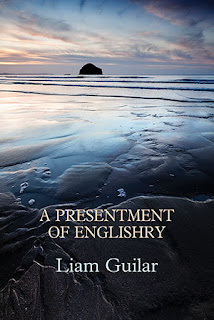
The full story will be published as A Man of Heart, (Vol 2 of A Presentment of Englishry) by Shearsman Press, UK, in early 2023.


Monday, June 6, 2022

Publication: The story of Vortigern, Chapter seven.


Chapter Seven brings part one to a close.   You can read it by clicking on the link below. (The first picture above shows an Anglo-Saxon building reconstructed at the Experimental Archeology site at West Stow. The second shows looms in one of the buildings.)   


https://brazen-head.org/2022/06/05/chapter-7-the-good-old-days/

Friday, March 11, 2022

Publication. Chapter six of the story of Vortigern. The Wasshail ceremony.


The Wasshail ceremony, in which Rowena meets Vortigern.

You can read the chapter at this link. Clicking on it will open in another page on The Brazen Head web sight..

 https://brazen-head.org/2022/03/11/chapter-six-the-wedding/


Friday, December 31, 2021

Publication: Chapter five of the story of Vortigern


The story of Vortigern continues. Chapter five is now up on the Brazen Head, and can be read at the link below.

While Vortigern's story might have an historical basis, this chapter is the first major slide from history as we might understand it to a narrative that feels more like a folk tale.


https://brazen-head.org/2021/12/30/chapter-five-an-age-of-wood/


The story of Vortigern is the second of three stories taken from Laȝamon's late 12th Century 'Brut'. The first story was published as A Presentment of Englishry, by Shearsman books.


Friday, May 21, 2021

Publication in Long Poem Magazine.


Delighted to be in this. The first chapter of the story of Vortigern and Hengist's daughter which follows on from A Presentment of Englishry. 

The second chapter is up at  https://brazen-head.org/2021/02/28/britannia-in-peril-an-extract-from-an-epic-of-britain/

The story begins with the nameless narrator being sold. His new master gives him instructions:


Come! I promise, you will not be harmed. 

Of course, he lied. Behind that door 

was something worse than many kinds of death.

But the spears for emphasis, 

so I followed him inside.


The door hanging fell and cut the light behind us.

A single room, walls heavy with dark tapestries,

bright embroidery flicking the firelight.

A single loom, a bed behind a curtain,

a tripod burning something fragrant.

A hag, slack-jowled and toothless

looked up from her spindle, unconcerned

and a woman, in profile by the central hearth

rose. I blinked.  Words 

acknowledging their limitations disappeared. 


This is my daughter. You will teach her;

British, Latin, you were a Christian, you will 

explain your god. The list had been rehearsed.

Though he spoke like a man treading a considered path,

scared as I was, his ambition seemed a little crazed. 


You will sing her the songs of your people.

We sail for Britain in the spring.

If you live that long, I will take you with me.

Until then you will teach my daughter. 

She will be a queen; my grandsons will be Kings.


Repeat what I just said.

I did but failed to reproduce his certainty. 


Monday, July 20, 2020

'Ruins', the story of Vortigern, is published in Long Poem Magazine spring 2020

'Ruins' is a long poem, 7 pages long, which tells versions of the story of Vortigern.

 In the 6th century, the remnants of a broken army, fleeing for the Welsh hills, find shelter in a ruined villa. To get through the night they tell the story of Vortigern and the Fall of Britain. But they have also found an old man hiding in the ruins, and he is adamant that he was a participant in the story they are telling. His version of events does not agree with theirs.


For someone interested in stories and storytelling there was so much to play with.

Although written to stand alone, 'Ruins' is the overture to a full length story of Vortigern, which will follow on from 'A Presentment of Englishry' (Shearman 2019).

You can hear a reading of an earlier attempt at this here: The poetry voice Podcast

Sunday, February 16, 2020

The Legendary History of Britain: St Germanus of Auxerre and how the process worked

If we think of medieval writers as first and foremost, writers, facing writing problems, and dealing with their problems within the framework of their understanding of narrative, the results can be illuminating. Rather than looking at theories of practice, one can observe practice at work. 

From Gildas to Bede to Nennius, from Nennius to Geoffrey to Wace, from Wace to Laȝamon, the Legendary History can be imagined as a Work in Development, with successive writers shaping the material. It’s not the same as successive versions of history, with each one getting closer to ‘the truth’. It’s a developing narrative where what controls the development is how the writers understood the art of storytelling. 


While Saint Germanus of Auxerre plays a very brief role in Vortigern’s story, the incident illustrates how The Legendary History worked as a process. It also suggests something positive about Laȝamon as story teller.

First the history, the problem and the process, then the result, because one of the more startling moments in Vortigern’s story, or in the whole of Laȝamon's Brut,  occurs when Vortigern’s son, Vortimer, meets with the Saint and delivers a speech that is probably Lawman’s invention. 

Who was Saint Germanus of Auxerre?

St Gemanus of Auxerre is an historical character. He’s as real as anyone can be in the fifth century. There’s more evidence for his existence than there is for Vortigern, Hengist or Arthur (which isn’t saying much). One commentator even extends that list to include Saint Patrick#. 

He visited Britain, from Gaul, in the early fifth century to combat the Pelagian heresy, possibly twice, at the request of the British church. While there he did not meet anyone called Vortigern, but he did lead a British force to victory over a mixed army of Picts and Saxons. Modern historians debate the reality of a second visit, and contest the plausibility of the ‘Alleluia Victory’, but the majority accept the historical reality of the Saint. His life was written in the late fifth century, and there are independent chronicle references to his visit, placing the first one in or around 429. He died on the continent before 450.

A writing problem.

Imagine you’re writing The Legendary History. Germanus presents you with three problems.  
1)    The purpose of the visits 
2)    The timing of the visits
3)    The visits are too well known to ignore.

1)    The purpose of the visit was simple: to combat the Pelagian heresy. There is no suggestion that the visitors were also asked to combat Paganism, or back sliding Christians. And there is no mention of any King. 
2)    The problem of timing is equally simple. Germanus visited in 429. According to Bede’s calculations, the Saxons (Hengist and Horsa) don’t arrive until 449/450.  
3)    In his note on this incident in Laȝamon, Madden pointed out that Geoffrey of Monmouth simply couldn’t leave such a famous figure out of the narrative. Bede tells the story of the visit at length, in his History of the English Church and People. It takes him five chapters (17-21) in book one.  Vortigern is nothing more than a name, Arthur isn't even that. 

Germanus later appeared in Nennius (though ‘Nennius’ may have got his saints confused). He tries to convert and redeem an incestuous Vortigern and failing, prays him to death. 
By this point Germanus’s story had already slid into the world of folk tales. His miracles have become less Bede’s muted proof of the saint’s holiness and more the extravagant actions of a powerful magician. 

Germanus, therefore is a fine example of what happens when you try to reconcile the legendary history with Bede, or the Anglo-Saxon Chronicle let alone with ‘history as we define it. Quite often, you can’t.

But if you take up the challenge to incorporate this incident into the narrative, then you have to try to make it meaningful within the narrative.

The process.

Madden may have been right, and Geoffrey may have felt that Germanus had to be in the story. But Geoffrey’s treatment is almost dismissive. And his placing of the incident doesn’t make a lot of sense.

He knew why Germanus had come to the country. ‘It was in this time [Vortigern has just married Rowena] that St Germanus, the Bishop of of Auxerre came, and Lupus Bishop of Troyes, with him, to preach the world of God to the Britons; for their Christian faith had been corrupted not only by the pagans but also by the Pelagian heresy, the poison of which had affected them for many a long day. However, the religion of the true faith was restored to them by the preaching of these saintly men. This they made clear almost daily by frequent miracles, for through their agency God performed many wonders which Gildas has described with great literary skill in his treatise.’ P160 

The throw away reference to ‘Gildas’ (he means the text we ascribe to Nennius) might be sarcastic as the miracles in the Historia Brutonum are exaggerated. But Just as Geoffrey has removed the incest motif in Vortigern’s story, he has left out the Saint’s dramatic role in Vortigern’s end. If Geoffrey knew the Britons had asked for help he doesn’t mention it. The incident is pointless in this version. It’s wedged between the wedding of Vortigern to Rowenna and evidence of Hengist’s growing influence over Vortigern.  It could be cut out and the story would not be affected.

But the narrative is already exerting its pull. There’s nothing in Bede, or the life of Saint Germanus, about combating paganism. The theological enemy is heresy. But If St Germanus arrived after Hengist, and if Hengist was corrupting the Britons, then it’s logical that the saint would need to do something about that. It’s also logical, in narrative terms to get rid of the saint as the divine killer of Vortigern. For Geoffrey’s narrative, it’s necessary for Aurelieus to kill Vortigern. And the incest motif can be dropped as well. 

The Variant version of the Historia, which is probably Wace’s source, moves the story to later in the narrative, after Vortimer has defeated Hengist and become King. And this might suggest the Variant is later than the Vulgate rather than earlier. If Geoffrey, for all his narrative sense, moved the incident earlier he was having a bad day.

Perhaps the Vulgate’s writer could not understand why Geoffrey had a holy man sorting out the church under such an unholy King.  But the move makes narrative sense. Having got rid of Hengist, his legacy has to be erased. 

The Variant is just as confused as to what the Saint was doing. In this version, the saints (plural) have come to stamp out ‘the Arian or Pelagian heresy’ as well as the impact of Hengist.    

Either Wace doesn’t understand Geoffrey’s reference to Pelagius, or the Variant’s ‘Arianism and Pelagianism’; he thought it uninteresting, or it just seemed out of place. Germanus is sent by ‘Saint Romain ‘ (Sainz Romainz) which looks like a dramatic misreading of ‘the roman pope’. Religion is restored and the people returned to the faith. However, even though the faith is restored, ‘Hear what devilry was perpetuated’.

Lawman must have picked up on the potential significance of the episode for his portrayal of Vortimer. He will expand it in a surprising way (see next post) giving the episode a significance it does not have in his sources. 

The initial narrative problem is one of chronology and it is simply ignored. It is impossible to   reconcile Bede and Geoffrey, and since Wace is committed to following Geoffrey, or the Variant, or both, he didn’t need to waste time in the attempt. 

It’s easy to forget a medieval author had very limited access to information. It wasn’t possible to ‘evaluate the sources’ as a modern student learns to do. Once the incident becomes embedded in the story, the process begins which sees the incident changing as the writers make it fit into the narrative and answer the question:  Why are you telling us this?  

-->
For Laȝamon's answer, see next post. 

Thursday, June 13, 2019

What are the differences between early Medieval poets and Modern ones? Part 1

My working theory is that I can learn about Laȝamon and his process by rewriting his text. The process is steadily illuminating aspects of his work that I would not notice if I were approaching it from a literary critical/historical/academic perspective. 

One of the major differences between Laȝamon as a writer and his modern descendants can be seen in the way he retells the story of Rowena. What he did, and what I feel obliged to do, are very different. 

But first an important general point. 

Medieval authors often appear inconsistent. Sometimes this might be the result of inaccurate copying. Sometimes, however, I think it points towards a much more interesting difference in their practice. 

In Geoffrey of Monmouth, Ambrosius launches into a diatribe about the sins Vortigern has committed. It’s excessive in length. It’s also inaccurate. What he says doesn’t match up with the story we’ve just read. Ambrosius accuses Vortigern of betraying both Constantine and Constans, the father and brother of Ambrosius and Uther. 

The second charge is indisputably true. But nowhere in Geoffrey’s text, describing the brief career and death of Constantine the father, is there any mention of Vortigern. Constantine is knifed by a Pict.  

If this diatribe had been written by Robert Browning we might see this as a subtle way of suggesting hatred has unhinged Ambrosius. But inconsistency seems not to have bothered Geoffrey or his subsequent translators.

Wace, following Geoffrey, has Constantine stabbed by a Pict, who had been in his service but had begun to hate the King: ‘I do not know why’. But when he comes to Vortigern’s death, Wace repeats the accusation that Vortigern has slain both father and brother. He refers to it twice. Once ‘in text’ and once in words that he gives to Ambrosius. Had he flicked back a few pages, he could have checked and seen that this is wrong.  

Laȝamon does the same. He expands and dramatizes the initial treachery, giving the Pict a name and lines to speak. He describes the assassination. Wace’s ten lines became 21 long lines (or 42 short lines in Madden’s edition). 

The scene obviously caught his imagination. He makes no mention of Vortigern. 

When he gets to Vortigern’s death, Laȝamon leaves out the long speech. No Robert Browning effect here. Instead, Ambrosius makes a grim joke about keeping warm. Then Laȝamon follows Geoffrey and Wace in repeating the accusation that Vortigern killed both father and brother. 

Either they couldn’t check what they’d read, which is unlikely; they had forgotten what they had written, which in Laȝamon’s case seems improbable, or it wasn’t important. 

Considering why it wasn't important, points towards an essential difference between Medieval and Modern writing which will be the subject of the next post.

But you can discover it for yourself by considering how you would film the scene where Rowena  murders Vortimer?  

A Presentment of Englishry is published by Shearsman UK and is available from The Book Depository and Amazon. Signed copies are available from www.liamguilar.com

Wednesday, May 22, 2019

Hengist's daughter as part of a pattern.....


It’s hard to understate the importance of ‘The History of the Kings of Britain’ (completed by 1136) to the Matter of Britain. Before Geoffrey there are scattered stories, anecdotes and incidents. After Geoffrey, the swirling fragments become stories set in sequence, given a spurious feeling of historical truth. 

The scale of the work is as easily overlooked as was the scale of the writer’s ambition and achievement. 

He may not have created the foundation myth of British history, but he made it work as a coherent story. Beginning with the legendary Brutus, he notes every King who succeeded down to the historical Kings like Edwin and Oswald. It has very little historical value but the originality and inventiveness, the artistic shaping of the narrative, and the effort that must have gone into it are impressive.

His simple chronicle framework was very flexible. Some kings could be nothing more than names in a list:

Rivallo’s son Gurgustius succeeded him, Sisillius came after Gurgustius, then Jago the nephew of Gurgustius, then Kimarcus, the son of Sisillius and after him Gorboduc. (p. 87-88)  

The frame also allowed for expansion, most obviously with Arthur, but also with Lier, Ebruac, Bellinus and Brennus and Vortigern. 

What the chronicle framework imposed on individual stories nested between others, was the necessity for a narrative arc. Each had to have its own beginning and end, but then had to fit into the sequence between preceding and succeeding reigns. 

The sequencing of events demands some form of causality: because this happened, that followed. Or the sequence will imply causality. This has happened, therefore what came before it was in some way responsible.

Even the most superlative imagination could not avoid repetition. The genre itself is built on it: 

A king comes to the throne, rules, dies. Repeat. 

It’s inevitable that patterns begin to appear and create a sense that the story is generating its own criteria against which actions can be measured. 

Laȝamon, reading Wace, sees that love stories are stories of aberrant behaviour. There’s nothing heroic or tragic about his lovers. 

For Laȝamon, one paradigm is begun when a King, seeing a woman, puts his desire for her before his duties and obligations. When we encounter Vortigern, lusting after Rowena, we’ve already heard the story of Locrin and Aestrild and know how badly that ended.  What has happened casts its shadow forward over this new event. But it also works retrospectively. The story of Locrin will qualify the story of Vortigern, and the story of Hengist’s daughter will qualify the earlier story of Aestrild. Both will qualify the story of Uther and Ygaearne, which is complicated enough already. 

The pattern should also set the alarms ringing when Arthur does something all for the love of Gweneviere.
And it's worth noting that only in the last of the four stories is the woman in any way responsible for the disaster that follows.    

Thursday, May 16, 2019

Hengist's daughter becomes an evil murderous step mother

This post is about Laȝamon's version of the story of Hengist’s daughter with a passing glance at Wace. 

(The names can be confusing so unless quoting I will continue to call Hengist’s daughter Rowena.  Vortigern’s son is called Vortimer. Translations from Wace are Judith Weiss’. Quotations from the Brut are taken from the excellent online 'Corpus of Middle English prose and verse' https://quod.lib.umich.edu/c/cme/ .) 


Going back to the sources sidesteps other people’s summaries. Plodding through the versions can reveal aspects of a well-known story other readers might not have noticed because they were looking for something else. 

As the story moves from Geoffrey’s Latin to Wace’s Anglo-Norman to Laȝamon's English we can watch the medieval storytellers at work. We can read their source, and then look at what they did with it. I’m going to leave this for the next post.

Wace.

It’s obvious that Wace, reading Geoffrey, visualised Rowena as he was reading. She doesn’t just move from the chamber to the feast, she is beautiful, and well-dressed and he tries to describe her:

La Meschine ot le cors mult gent
E de visfu bele forment
Bele fu mult et avenant
De bele groisse e de bel grant;
Devant le rei fu, desfublee,
Qui merveilles l‘ad esgardee

(The girl had a fine body and very beautiful face; she was fair and comely, handsome in shape and size. Uncloaked she stood before the king who could not keep her eyes off her.)

She stood before the King ‘desfublee’ sounds so sleazy that it seems a pity it just means ‘without a cloak’.

Wace reinforces the speed of Vortigern’s infatuation:

Le jur l’ama si l’out le seir 
(he fell in love with her in the morning and had her in the evening) 

He also emphasises Rowena’s status as stepmother. At the wedding, he states that Vortigern had a wife who was dead, and names his three sons. When Rowena organises the death of Vortimer, she is ‘cum mal marastre’ like a wicked stepmother. But this stepmother is not fighting for her own children, she acts because her father has been exiled. 

Laȝamon

Laȝamon's major additions to her story are two-fold. The first is that he imagines what happens in the chamber before she walks into the feast with the Wassail cup: the second is that in his version, rather than organising Vortimer’s death, she murders Vortimer in a twisted repetition of the Wassail ceremony. 

He also ties the story together. Laȝamon's answer to the question that hung over Nennius’ version of the story ‘Why are you telling us about this girl’? is that because of her, Vortigern favours the Saxons over his own people, is vulnerable to Hengist’s manipulation, and endangers his people and himself by turning away from Christianity. This is reinforced in a number of speeches he adds to Wace.   

Laȝamon habitually expands on Wace. He adds detail and direct speech.  Picking up Wace’s stepmother comment he states that Vortigern’s first wife was a very Christian woman. 

He also sees things differently. When Rowena arrives in the poem, unlike Geoffrey and Wace he does not mention her appearance. She is Rowena, ‘his daughter, who was most dear to him’. This is consistent with Laȝamon’s habit of seeing people as identities whose definitions depend on their relationships and social roles. He acknowledges her appearance at the feast episode, but in place of Wace’s description quoted above he writes ‘The beautiful Rowena sat beside the king ‘. 

Laȝamon’s first major addition to her story is that he imagines what happens in the chamber before she walks into the feast with the wassail cup.

She is, above all else, Hengist’s daughter, and Hengist is aiming her at Vortigern like a King-seeking missile. Wace wrote that she was beautifully dressed. In Laȝamon, Hengist enters the chamber and gives orders to ensure she is beautifully dressed: 

he heo lette scruden; mid vnimete prude.
al þat scrud þe heo hafde on; heo weoren swiðe wel ibon.
heo weoren mid þan bezste; ibrusted mid golde.

She is then led before the king by high born men. It’s hard to imagine how she could be more of a passive object.

The major change that Laȝamon makes to her story ties several strands of the narrative together and makes her Vortimer’s killer. She moves from passive, obedient object to treacherous murderer. 

The Question of Religion 

The real divide in this narrative is not ethnic: Briton vs Saxon, but religious. All three writers are horrified that a Christian king weds a pagan woman. All three maintain the devil entered Vortigern. 

Laȝamon expanding on Wace, manages to sound horrified. The implication from Geoffrey onwards is that if Rowena had converted, if Vortigern had insisted on the conversation of the Saxons under his command, there wouldn’t be a problem. 

Laȝamon makes the point explicit when the Britons give Vortigern an ultimatum which is not in Wace. 

The anonymous speakers state that Vortigern's crime is that he bought disaster and great evil upon himself. He has bought in heathen folk. He has abandoned God’s law for the foreigners and will not worship God. If the heathens take over, they will not keep him as king for very long if he is still a Christian. The speech ends, ‘Then you will be damned on earth, and your wretched soul shall sink down to hell, then you will have paid the price for the love of your bride’. 

Vortigern rejects their criticism. He states that Hengist is his father, that Rowena is his beloved wife. He has sent for Hengist’s son Octa. In a startling comment he calls the Saxons wine deore…dear kinsmen.

This is not good history, but it makes sense in the story. 

When Vortimer the son takes over, he is a good king, Britain's darling,  not only because he thrashes the Saxons in battle, but because he rebuilds the churches and re-establishes Christianity. He ends a long speech to Saint Germain, who he has invited from Rome to straighten out the church in Britain, by repeating the claim that through his daughter Rowena, Hengist has lead his father astray.

Rowena now considers what she could do to avenge her father who Vortimer has driven out of the country. And Laȝamon moves the problem of her religion into an opportunity she is willing to exploit. She starts sending gifts and messages to Vortimer, saying that she will become a Christian if she can stay with Vortigern. 

For his father’s sake, Vortimer agrees on condition she observes the Christian faith.

She turns up wherever he is, willing to accept the Christian faith. Vortimer is delighted, and very soon dead. 

In a twisted version of the wassail story she offers him wine. But she has concealed poison, in ‘ane guldene ampulle’ beneath her breasts, and having drunk half the wine in the goblet, while Vortimer is laughing at what she’s said, she poisons the rest of the wine and gives it to him. 

After he has been poisoned, she orders her servants and followers to saddle up and they steal out of the town. Travelling by night they reach Hengist’s fortress at Thongchester, where they lie to Vortigern that his son is planning to attack him. 

And telling that lie is the last thing Rowena does in the poem. She is no longer involved in recalling Hengist, or sending him secret messages before the massacre on Salisbury plain. Why Laȝamon leaves out these further examples of her swikfullness is a mystery. 

Hengist saves Vortigen from the massacre on Salisbury plain ‘Because he has suffered great misfortune and he has my fair daughter as his queen..’ but what happens to her after the death of Vortimer is of no interest to the poet.

If her father aims her at Vortigern, like the spear that may have once given her her name, she conceives and plans the murder of Vortimer entirely on her own. 

Rowena moves from the nameless girl of Nennius’ slander to the wicked woman whose only independent action is to kill, treacherously, ‘Britain’s Darling’.  Poisoning is not an uncommon way of removing Kings in the Brut. There is a range of female characters in the English Brut.  They are never simply either passive or evil and the Brut seems freer of clerical misogyny than one might expect, but Rowena is presented as particularly evil, not because she's a woman, but because of what she does and how she does it.  


Wednesday, May 8, 2019

What was the name of Hengist's daughter 3/4

If you thought the answer was Rowena, read on….


The Bibliography.


When Geoffrey of Monmouth picks up the story three hundred years after Nennius, the ‘Good Vortigern’ version has probably disappeared and telling an anecdote that did little more than vilify the ancestor of a forgotten dynasty would have been pointless. (For Nennius's version see previous post.) 

In the narrative arc that Geoffrey had skilfully created, the girl had to do more than serve the booze and be bedded by the King if he were to avoid the story teller’s nightmare when the audience asks, yes, but why did you tell us that?   

Geoffrey drops the incest story (if he ever knew it) and the incidents with St. Germannus, and then gives the girl a name and an active role to play. To the question, ‘Why did you tell us this?’ he manages to suggest that she is instrumental in the fall of Britain. She is no longer simply an example of Vortigern’s lack of sexual control. She exploits her influence and position to support her father and her people. 

The Name

Tatlock listed six versions of her name in six of the surviving mss: Renwein, Renwen, Roawen, Ronwen, Rowen, Rouwein, Ronven. It’s easy to overlook the fact that however you spell it, the name is not Germanic. 

Ron Wen makes sense in Welsh as ‘Slender/white spear’ but as Tatlock pointed out, it makes no sense in a Germanic language. It’s been suggested that Rowen is a British attempt at an English name Hrothwyn, but that seems strange since both Hengist and Horsa remain resolutely English and Ronwen, not Rowan is the older form. Tatlock couldn't find it anywhere as a proper name. Rachel Bromwich pointed out that the name occurs nowhere else. It is not found in any other Welsh source except as the name of Hengist’s daughter. 

(For sanity’s sake, I’m going to refer to her as Rowena except in direct quotes.)

Her new role.

In this new version, Rowena arrives in Britain with Saxon reinforcements. We are told her beauty is ‘second to none’.  She serves the drink, but Geoffrey introduces the Wassail episode, fleshing out Nennius’ feast. Approaching the king with a golden cup full of wine she says, ‘Laford King Wacht heil’ (Even in Geoffrey’s Latin the quote is in Middle English).  Vortigern turns to his interpreter who explains the custom. She says, ‘Wasshail’, he replies ‘Drink hail’, takes the goblet, kisses her, and then drinks. Repeat as required.

It may be a ‘folk motif’; it may have mythological significance (in later Welsh tradition ‘R. the Pagan Woman’ is seen as the progenitor of the English); it may be an origin story for a drinking custom current in Geoffrey’s time; it may be all of the above, but it’s guaranteed to bring the girl to the King’s immediate physical attention. It succeeds.

They are married in haste, and Hengist, in consultation with his brother and advisers asks for Kent in return. 
So far, Nennius with additional details. 

The wedding infuriates Vortigern’s leaders and sons. But as soon as she has been ‘handed over’ Hengist is now in a position where he can speak ‘as your father in law’. More Saxons are invited to Britain, and settled in the north. The Britons, alarmed by the influx of pagan warriors, protest to Vortigern but ‘Vortigern was completely opposed to accepting his people’s advice, for, because of his wife, he loved the Saxons above all the other folk’.

Vortigern’s son, Vortimer, is appointed king and is not only successful in battle against the Saxons but begins restoring churches. Oddly the latter detail is the catalyst for Rowena’s first semi-independent action. 'Semi' because in Geoffrey’s story the devil and evil spirits are active:
‘A certain evil spirit which had found its way into the heart of his step-mother Renwein immediately became envious of this virtuous behaviour of his and inspired her to plot Vortimer’s death’.   

She researches poisons and then has him killed, having corrupted one of his servants with innumerable bribes. This is not in Nennius but does provide a reason for Vortimer’s sudden death.  

After Vortimer’s death, the Britons restore Vortigern to the throne. ‘At the request of his wife’ he sends messengers to Hengist in Germany, to ask him to return to Britain. Vortigern asks him to come secretly with a few men. Hengist returns with three hundred thousand warriors. Learning this, Vortigern and the princes of the realm decide to oppose him. ‘The daughter of Hengist sent messengers to tell her father of this decision and he in his turn considered what he could do best to counteract it’.

This is her last action in the story, nor is she mentioned again. Geoffrey drops Hengist’s statement that the Saxons will protect Vortigern during the massacre ‘for the sake of my daughter’. Geoffrey makes no reference to anyone else dying with Vortigern in his tower. 

Developments

In this version then, Rowena plays a more direct role in the fall of Britain.  She is responsible for Hengist’s growing influence over Vortigern, for the death of Britain’s heroic defender, and for the information that pushes Hengist towards the treacherous slaughter of the Britons. 

What Geoffrey finds most shocking is not Vortigern’s uncontrolled sexual desire, or the fact he’s ready to trade Kent for the girl, but the fact that she is a heathen. Having repeated Nennius’ claim that the devil enters Vortigern’s mind, Geoffrey interrupts the narrative ‘I say that Satan entered his heart because, despite the fact that he was a Christian, he was determined to make love with this pagan woman’.  

In Geoffrey’s version, the enormity of this is emphasised by a triple movement in the narrative. When Hengist first appears, Vortigern comments negatively on his faith. When Hengist later asks for land, Vortigern refuses the request because Hengist is a pagan. The extent to which Vortigern is overwhelmed by his desire for the girl is thus emphasised when he makes no objection to her faith. The implication being that if he had insisted on her conversion before the marriage, it would have been acceptable. 

Rowena, clothed with a variety of names, and now playing an active role in the fall of Britain, will have her story fleshed out and finalised by Wace and Laȝamon. The structure of Geoffrey’s narratives suggested a pattern. Laȝamon makes the pattern explicit and raises Rowena from a nameless server of drink to a conniving murderer. Which will be the third and final post.