Showing posts with label criticism. Show all posts

Thursday, May 9, 2024

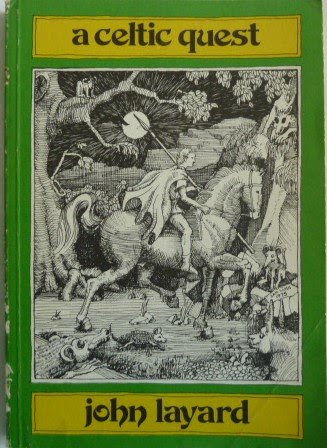
A Celtic Quest, by John Layard. A review of sorts.


A Celtic Quest. John Layard 1975.


In my last post I praised ‘This is not a Grail Romance’ for attempting to read a medieval story on its own terms. John Layard’s ‘A Celtic Quest; Sexuality and Soul in Individuation. A depth-psychology study of the Mabinogion legend of Culhwch and Olwen’ is a fine example of what happens when a critic does the opposite, taking a text and imposing a reading practice on it.


As a demonstration of a psychoanalytical meditation on a text, the book is fascinating. As one way of thinking about the development of an individual, it is coherent and thought provoking. But I think it would work best if you haven’t read the story it claims to be studying. 


As a reading of the text, rather than a performance that uses the text as a starting point, it doesn’t offer much in the way of critical enlightenment. It suffers from the author’s wide knowledge of what something might mean and his assumption that because something might mean something in another story, it means the same thing in this one. His willingness to shoehorn the story into an existing theoretical paradigm requires a willing suspension of incredulity on the part of any reader who isn’t a card carrying Jungian. 


Ironically  I suspect the book’s value may lie in forcing a reader to be patient and negotiate the tension between the reading and the text. The struggle to suppress the temptation to throw the book away, and find some useful insight into the story is salutary.


Firstly, a reader has to suppress the urge to object to statements like this:

 “’Born in a pig run’ is equivalent to being ‘born of a sow’ (p.11.).’ No. Simply, no, they are not. Culhwch’s mother is most definitely not a sow. 


Secondly. Anything can symbolise anything. Freud’s great perception about dreams was that the symbolism is always specific to the dreamer. This seems a useful way of approaching symbolism in stories. It’s not Layard’s. He is wedded to the idea of archetypes. He reads the story as though it could be neatly analysed and explained by recourse to an old fashioned book of dream symbols.


When Culhwch and his companions find Custennin the shepherd, the latter is sitting on a mound overlooking his limitless flock of sheep: 

‘…he is a man in the service of the Devouring mother, since in dreams and mythological imagery, the mound he stands on would seem to symbolise the breast’ (p.38)


At times this borders on self-parody. When Olwen’s father is finally beheaded and his head stuck on a stake; 

‘Another aspect of body imagery is that it may be that the mound symbolises the breast, with Ysbaddaden’s head on it  stake representing the ‘bad nipple’ . The hero seizes the good one ‘And he took possession of his fort and his dominions’.; the fort of the breast and the immense power it wields.’(p.198) 


With all due respects, this is hard to take seriously. There is nothing in the story to suggest ‘the fort of the breast’,  and this in a story where the storyteller delighted in playing with the potential absurdity of names.  Culhwch does not take possession of ‘the fort and his dominions'.  The ‘he’ in that sentence refers to another character, Goreu, who is also the one who beheads Ysbaddaden.


It feels as though symbolism is being found everywhere for the sake of finding symbolism with little reference to the story. When Cei murders Wrnach the Giant, having first tricked the giant into giving him his sword, Layard writes:


‘The scabbard here stands for the giant’s muddled head, into which Cei plunges the sword. The sword also symbolises the power of insight (the Logos) that pierces and destroys the blind forces of darkness (the blackness of the giant) or of the unconscious super-conservativism and resistance to change that giants are apt to represent.’ (p.102) 


Faced with such a reading it seems almost pedantic to point out that Wrnach is not described as black or back haired. But it does seem to be a worth asking how this applies to the story. Who gains what insight? Wrnach is dead, and Cei is about to leave the story in a fit of petulance after Arthur teases him. 


How the reading applies to the story is a constant question. Most readers will see Culhwch’s stepmother’s actions as wilfully (perhaps spitefully) putting him in danger. When she says he will not marry any woman unless it is Olwen, the phrase she uses  ‘ Tygaf tyghet’ is glossed by Bromwich and Evans as ‘I will swear a destiny’ and they point out the same phrase is used by Aranrhod, in the Fourth Branch of the Mabinogi,  when she swears her three [debilitating] destinies on her own son, Lleu. As Culhwch soon finds out, no one asking for Olwen’s hand has escaped alive. 


However, for Layard: ‘stepmother and fairy god mother are thus seen to represent two aspects of the same female spiritual principle, at first appearing to be 'bad’ but turning into the ‘good’. Such will be seen to the nature of the stepmother in this present tale, who in fact causes the hero to undertake all sorts of fearsome tasks so as, in the end, to win the prize most worth having, the spiritual bride or soul’.  (p.13). 


It feels pedantic, again, to point out that Culhwch doesn’t complete ANY of the forty tasks he’s given. Other people do it for him. He earns nothing, and learns nothing. He isn’t so much a non-hero as a non-presence in most of the story. The paradigms of the fairy tale or the ‘hero journey’ are not helpful here and what fairy godmothers and step mothers do in other tales seems irrelevant. 


These are not isolated or uncharacteristic examples but I think they demonstrate how a reading practice is being imposed on the text. 


Like most reading practices it also requires the reader to accept the critic’s assumptions: in this case those underwritten by a Jungian Binary, which in a simplified form, wants  to divide everything into two columns, one marked ‘male’ and the other ‘female’, regardless of gender or actions in a story. The Twrch Trwyth, the terrifying wild boar who slaughters men and devastates provinces, who can only be hunted by the mustered warriors of three kingdoms: 

..’is the image himself of nature outraged at having to be transformed, female in origin but in male guise to indicate its wild destructiveness’. (p.11) (The TT is a King who God has turned into a boar for his sins, and the aim of the hunt is not necessarily to  kill him, but to seize the comb, razor and sheers from between its ears.)


The binary is 19th century and to non Jungian acolytes completely arbitrary. Things are masculine or feminine because someone said they were. ‘Magic is always feminine” … and “…thought is a masculine attribute which women can have as well as men (witness the stepmother) once they admit the man as mate and not only as son’. (p.197)


Her husband is murdered so she can be the second wife of Culhwch’s widowed father. Her speeches in the text do not suggest ‘thought’ or that she has any attitude towards her new husband except relief to find he isn’t impotent.


Culhwch and Olwen is one of the world’s great literary performances. In its entirety it is like no other text. It is full of inconsistencies, and lacking in what a modern reader might expect in terms of character development and plot. It is not a fairy tale. But Leyard’s treatment of it as though it neatly illustrates a Jungian approach to Individuation, ignores the story itself and becomes an excellent example of what happens when a modern reading practice is imposed on a medieval text. 


Thursday, June 29, 2023

What's great about Sir Thomas Malory's Le Morte D'Arthur


My attempt to explain why I admire Malory's book, and why I've been rereading it since the late 1970s, is published on The Brazen Head Website. Clicking on the link below should take you there.

https://brazen-head.org/2023/06/27/thomas-malorys-civilisation-shaping-chivalry/ 


Saturday, April 15, 2023

The winner of this year's national poetry competition (UK 2023).

You can read the poem here.

 https://www.theguardian.com/books/2023/mar/29/poem-of-beauty-wit-and-grace-about-fathers-and-sons-wins-national-poetry-competition


The headline reads: Poem of ‘beauty, wit and grace’ about fathers and sons wins National Poetry Competition” and continues:  Ex-New York cab driver Lee Stockdale wins £5,000 after My Dead Father’s General Store in the Middle of a Desert beat 17,000 other poems ‘


Poetry competitions are a lottery. In the absence of a stated criteria it must be very difficult to distinguish between 17,000 poems. The thought of having to read 17,000 poems is frightening. How could you pay each one the attention a poem requires? How easy would it be to miss subtlety? 


When you read the article, the events behind the poem, and the author’s comments on the poem, come before it and that will inevitably colour your judgement.  But the judges were reading without these, and every poem should stand on its own, without any external information about the writer. 


Apparently this poem exhibits: ‘beauty wit and grace’. 


As a description this is vague, if not practically meaningless. It’s the kind of thing people say about poems when they have nothing specific to say. How would you quantify those qualities? How would you explain how one poem has more ‘beauty’ than another? How would you make your draft more ‘graceful’? 

And when you read the poem you’re going to wonder how any of those words apply to it, especially ‘wit’.


As an occasional editor, my very rough way of assessing any poem is to start with the basic idea that writing a poem offers the author the possibility of manipulating diction, syntax and line endings for effect. Content can be put to one side. 


This is not a precise criteria. If you read a lot of poetry you will have your own but it’s flexible enough to accommodate the many different kinds of poem that are in circulation today. It’s possible to look at any poem, in any style, and ask what does the writer achieve with these three possibilities. Their interactions will, in skilful hands, bring about the effects that can be associated with good poetry and deliver the pleasures that only a good poem can. 


I see little happening in this poem with any of these three.


There is a possibility that the diction is being deliberately used to blur the age of the speaker. 'Bullshit’ sounds like a contemporary adult, 'mean to me' like  an eight year old, 'a dear sweet man' like a stereotypical maiden aunt. But it’s not consistent and it doesn’t tie in with the rest of the piece. 


‘The judges called My Dead Father’s General Store in the Middle of a Desert a “remarkable” poem that “caught and held our attention from first reading”.


Think of the great opening lines you know. Your choice, not mine. You’re reading 17,000 poems, and you read:


It has gas pumps with red horses and wings,
but is not merely a gas station, your father is not my father,
standing over me with a clipboard, checking off things done and left undone.

How does it measure against your gold standard? Why is the poet telling me his father is not my father? What purpose is served by the abrupt pauses in the 2nd and 3rd line? What is gained by setting the lines out like this and not:


It has gas pumps with red horses and wings,
but is not merely a gas station, 
your father is not my father,
standing over me with a clipboard, 
checking off things done and left undone

Unless it’s to keep under the 40 line limit?

Think of the great lines you remember, and the images that stick in your head even if you can’t remember them word for word. 


Now read this:


I begin to see what a dear, sweet man he is. Is this because he is dead?
I wish he were alive again.
I don’t think he killed himself to be mean to me personally.

The first line sounds very clumsy to me and the abrupt break in the middle calls into question why it’s such a long line. The is/Is is awkward. You’re forced to stop after one to pronounce the next one calling into question the unity of the line. The third line jangles to be/to me/personally with the second half hanging off the first. Word choice? Do you need ‘personally’? Isn’t that implied in ‘mean to me’? Is there a meaningful difference between ‘I wish he were alive again’ and ‘I wish he were alive’? 


Would these lines lose anything written like this:


I begin to see what a dear, sweet man he is. Is this because he is dead? I wish he were alive again. I don’t think he killed himself to be mean to me personally.


Is this even good prose? 


Arrange the lines like this, 


I begin to see what 

a dear, sweet man he is. 

Is this because he is dead?
I wish he were alive again.
I don’t think he killed himself 

to be mean to me personally.

The first two are a guess but the others follow the abrupt breaks in the long line There’s nothing wrong with declarative statements in a poem, or a conversational diction, but these staccato statements of the obvious would not be out of place on a post card. 


In the article, the poem is placed after the poet’s biography. And we realise this writer experienced an horrific trauma as a child when his father committed suicide. But while we must sympathise with the writer, it doesn’t redeem the writing. It would be grossly inappropriate to perform acts of literary criticism on a poem written for a funeral or a wedding, or written as a private way of coming to terms with a trauma. But once that poem is offered for publication, or entered into a competition, then the writer is claiming this poem is worthy of a stranger’s interest, and inviting critical scrutiny. 


15,000 entrants must be wondering in what way this poem is better than theirs.


(For the record I did not enter this competition and I have no desire to be a judge. And last year's competition winner seems so much the better poem.)  

Monday, August 29, 2022

Robert Graves, Poetic Unreason and reading The Tempest.

This began as a contemplation of John Kerrigan’s “Shakespeare’s Originality’ (2018) and my intention was to compare Kerrigan’s chapter on The Tempest, as an example of his overall argument and approach with that of Robert Graves in ‘Poetic Unreason’ (1925). But given how obscure the latter text is, what follows is an extended discussion of Graves’, ‘The Tempest, an Analysis’ (pps. 221-232).


A slight though not inconsequential digression


Eliot vs. Graves as critics.


Eliot. 'Hamlet', in ‘The Sacred Wood’ published in 1920.


‘The only way of expressing emotion in the form of art is by finding an ‘objective correlative’; in other words, a set of objects, a situation, a chain of events, which will be the formula of that particular emotion: such that when the external facts, which must terminate in sensory experience, are given, the emotion is understood.’ (p100)


The younger Eliot was good at smoke and mirrors. If you try to untangle the difference between an ‘objective correlative’ and a symbol, or you ask how any ‘external fact’ can objectively represent something as messy as an emotion in a way that will be recognisable to everyone, you may wonder what happened to his philosophical training.  It sounds profound and reasonable…until you stop and think it through.


But in his early criticism Eliot often withdraws from specifics. In the same essay he writes:


‘We must simply admit that here [in writing Hamlet] Shakespeare tackled a problem which proved too much for him. Why he attempted it at all is an insoluble puzzle. Under compulsion of what experience he attempted to express the inexpressibly horrible, we cannot ever know’.


Eliot is happy to raise a question and then avoid the necessity of offering an answer. It also absolves him from grounding the claim in any kind of evidence. Eliot’s essay is based on the assumption that ‘we’ all agree that Hamlet the play fails because Hamlet the character experiences an emotion in excess of the facts that might be used to explain or cause it. Whether ‘we’ would all agree with this, given the opportunity to dissent, is a different matter. Having damned the play, on grounds that are themselves questionable, it is enough for him to suggest that Shakespeare was driven by a personal compulsion to create Hamlet, and the play is a failure because he had not mastered that compulsion. But to understand that process ‘we should have to understand things which Shakespeare did not understand himself’. 


Eliot is a fascinating critic to read if you want to learn how to sound profound. And he has been fruitful for generations of literary critics because of what can be said about what he ‘meant’. There are versions of his essays, in the writings and lectures of his exegetes, which are far more interesting than anything he ever wrote. 


Graves on the other hand is fascinating to read for other reasons. He would probably have agreed with Eliot that the writing of Hamlet, or the writing of any play, was Shakespeare’s attempt to solve some kind of personal problem. At the time Eliot was writing The Sacred Wood, Graves was working towards a theory of composition that appears first in ‘On English Poetry’ and is then given its fullest expression in ‘Poetic Unreason’. Eliot claimed that to know why Shakespeare took on Hamlet would require ‘a great many facts in his biography, and we should like to know whether, and when, and after or at the same time as what personal experience he read….’. Eliot stops there. Having raised a question which he says cannot be answered, he exits, leaving us to wonder what was the purpose of his essay.


It’s a style that has been endemic in critical studies since then. The fashion for ‘problematizing’ texts was characterised by the failure of a many of its practitioners to do more than point out the problem. Graves, on the other hand, having come to a theory of composition, was more than ready to not only point in the direction he thought the critic should head, but to march resolutely towards his objective and persist in the assault long after common sense suggested that the objective wasn’t worth the effort. But his refusal to fudge the issue and stop becomes a way of showing why going half away along the path is equally pointless. 


‘Poets are entitled to approach the truth imaginatively as well as by the slower methods of scholastic research.’ (p91)


To understand the composition of any text, or in this case the play: ‘The easiest approach to the study of the composition of The Tempest is to sort out what has already been discovered of the contributory materials and then see what is left to be explained both of the materials and of the motives’ (p.194)


Graves states that there are three main sources which he seems to assume are well known. A German play by Ayrer, Die Schone Sidee

A Spanish Romance by Ortunez de Calohorra: Mirror of Princely deeds and Knighthood, translated and printed in 1580. 

A ‘fairly large body’ of literature dealing with adventure in the new world. (p.194)


For the modern reader, confronting the RSC Shakespeare’s declarative ‘No known Source for the main plot’ this raises immediate questions which we shall blithely ignore. 


Graves claims that once these three sources have been fused by the writer there is not much to account for: The masque, the drunken sailors, Caliban and his mother.


And off Graves sets to ‘account for’ these, like Alice chasing the White Rabbit. First, he constructs a biographical narrative from the sonnets, links this to the chronology of the plays, and goes on to show how The Tempest is Shakespeare’s attempt to reconcile the conflicts these personal disasters caused. The necessary catalyst that brings together the Author’s life and his reading was, according to Graves, a passage in Isaiah in the Bible. ‘Nobody familiar with the psychology of romantic creation should deny that this passage had the power of crystallizing into dramatic form all the loose material floating about in Shakespeare’s mind’. (p. 210) 


Perhaps I am unfamiliar with the psychology of romantic creation, but it seems to require a great deal of charity to follow Graves at this point. I can’t see the link between the biblical passages and The Tempest.


However, he goes on to ‘account’ for the features of the play that are not in the sources. 

Caliban is W.H.; Sycorax the Dark lady; Ariel is an emanation of Shakespeare himself. The drunken sailors discover themselves as Chapman and Jonson, rival poets. (214)


Graves was nowhere near finished. Ariel’s song ‘Full fathom five’ and Prospero’s Epilogue have also to be ‘accounted for’, and even then he keeps going. Contacting a scholarly expert, to check his findings, he discovers he needs to add the ‘recent’ murder of Henry IV and the marriage of both Shakespeare’s own daughter and the marriage of the daughter of King James. In this historical doubling Sycorax now ‘in the political sense’ is Catherine of Medici and Caliban is Jesuitism. Prospero as ideal King is both Henry 4 of France and James 1 of England, and Graves’ scholarly source provides supporting evidence that the other subsidiary character have political sources and the lengthy conversations amongst the stranded nobles have political overtones.


By which point the exhausted reader is beginning to wonder what doesn’t relate.

Caliban may well be the result of combining ‘An Adriatic devil from a Spanish romance, a sea cow seen in the Bermudas, Jesuitism generally; Raviallic particularly’ as well as Mr. W.H.  Everything a writer does, sees, hears and reads, is material for the finished work. It’s to Graves’ credit that he keeps going, but his determination illuminates the inevitable futility of the activity. Anyone trying to unravel all the threads that combined in the finished work is taking on an impossible task. A task made even more complicated by Graves’ understanding that, ‘How far he [Shakespeare] knew after writing each scene what that scene was about …is impossible to say’. 


The chapter invites a peculiar ambivalence. Graves had taken ‘source’ analysis’ beyond a listing of similar texts, which had to be an advance. The reading takes The Tempest well beyond the usual ‘Shakespeare is Prospero and this is his farewell to the theatre’ which has to be in its favour. 


If Graves is right that poetic composition is the poet’s response to personal issues of which he or she may not be aware, and if the biographical narrative Graves creates from the sonnets is valid, and if it matches up with the chronology of the plays, and if Shakespeare had access to the texts Graves had identified, and if his rivals are the models for some of the characters, then it seems possible to argue that The Tempest is the way it is because of all this.


That’s a great many ifs. Apart from the question of how much goodwill you have to extend to Graves and his argument or the fact that if any one of those ifs is wrong the whole argument comes apart, the chapter raises two issues. 


Firstly, the argument can’t be proved. Therefore, apart from pointing out that  ‘this text was not available to Shakespeare because….’ it can’t be disproved. It’s possible for another critic to theorise a different problem; Shakespeare’s ambivalence to his daughter’s marriage for example, a slightly different set of sources, and a different set of contemporary models and both constructions would be equally valid. Apart from the historical grounds of showing Shakespeare could not have used a source, there would be no way of choosing between them.  


Although he later disowned his theory of composition, I think it rewards consideration if you’re a writer of poems, but from an academic point of view, although it seems like New Historicism avant la letter it’s a dead end. Once you’ve started out you have to keep going, looking for explanations for everything in the play. And having ‘explained the Tempest’, presumably you then go on to explain each of Shakespeare’s plays and while you’re doing that other scholars are ‘explaining' 'The Ring and the Book’ or ‘Paradise Lost’. As an intellectual activity, it must be very stimulating for the person doing it, but the external value of the exercise seems limited. The act of creation is too messy and contains too many variables to be reduced to a formula. 


One thing redeems Graves’ approach throughout Poetic Unreason. Academic criticism, for most of the twentieth century has been reception orientated. A sceptical observer might suggest the art of academic criticism is mostly the art of using texts as springboards for displays of erudition other critics can object to.  


On the other hand Graves was worrying away at a theory of composition from the perspective of someone who composed poetry. ‘New Historicism’, driven by institutional requirements to make any form of critical activity ‘New’, would develop into a sophisticated academic version of trainspotting which often leaves the reader baffled, wondering what was the point of wading through pages of cleverness. Graves was trying to prove something about authorship. If his theory held good for himself, it should apply to others.  He was adamant: ‘my chief care in this chapter has been to illustrate my general theory of the psychology of poetry by means of the Tempest, rather than to anatomize The Tempest as a scientific subject with the absolute scientific idea that by presenting one thing in terms of something else or even several other things we can arrive at a knowledge of its true character’ because, as he concludes,


‘Even if every aspect has been discovered, and considered in its relation to the context, there still remains the personality, the individuality of the piece that baffles further scrutiny, something more than the aggregate of the histories that compose it.” P. 232 


If Graves’ attempt feels awkward, it also, implicitly, offers a criticism of books like John Kerrigan’s 'Shakespeare's Originality'. If you go that far, and still end up stranded in no man’s land, with your readers wondering why you’d bothered, what’s the virtue in going less than half that distance? The modern version is open to all the criticism of Graves’ method, without the saving grace of the clarity of his prose, and his willingness to push on to his conclusion.  


Friday, July 29, 2022

Letters of Basil Bunting Selected and edited by Alex Niven. #2


 The letters as biographical evidence;

‘Letters are meant to be written to affect one bloke, not a public. What is true in the context of sender and recipient may be a bloody lie in the context of author and public…’ (Bunting to Zukofsky, June 1953 qtd in Burton, p. 354)


What becomes obvious, when Bunting's letters are printed in full and in some kind of sequence, is how limited they are as biographical evidence.


A skilful biographer, like Richard Burton in his biography of Bunting, makes cautious use of letters as biographical evidence. On their own they don’t constitute biography. Something mentioned in a letter may be fictional; an absence in the letters doesn’t necessarily mean it’s absent from the life. Burton’s biography makes it clear that Bunting loved a good story and wasn’t above embellishing one to make it more interesting.


Before email killed it, letter writing was a performance art where content and expression were shaped towards the recipient.  Unless explicitly so, a letter wasn’t testimony delivered under oath, or an essay written for examination, despite the tendency of scholars to treat letters as both. The one letter in this collection, explicitly written ‘for the record’ is different in tone and syntax from the others. 


Bunting repeatedly told his correspondents that his letters were not written for publication or posterity: ‘None of what I write in letters is meant in any permanent way, it isn’t thought out or deliberated on. It is offered merely in passing, not meant to be dwelt upon’ (p.193).


It's a caveat worth keeping in mind. Thanks to Niven, interested readers now have access to complete letters, contextualised in the sequence in which they were written. 


The letters hint at biographical events for which there is no external evidence. ‘I am off for the continent, and I hope to be in Italy sometimes in the spring and I hope to visit Rapallo and I hope to meet you there. My Girl Died’ (p.24).


Niven can only note: ‘This curious elliptical aside ,-for which I can find absolutely no context-brings home how little we really know of the minutiae of BB’s early years’ (n. 67 p. 24). The same is true of Bunting’s strange claim to have led some kind of protest in London during the succession crisis.


Later in life, Bunting was adamant, in both letters and interviews, that Wordsworth had been a major influence on him from childhood. When Bunting discovered that Peggy Greenbank was still alive, he tells his correspondents that he had never not been in love with her. It would be possible to extract such statements as ‘evidence’, there is no reason to doubt him, but it’s now possible to see that neither claim is mentioned in any of the letters prior to the ones in which the claim appears (1953 and 1965 respectively). 


Whether this means the statements are ‘false’; demonstrates the limitations of letters as biographical evidence, or opens up the rabbit hole that ‘true or false’ might have different definitions in different contexts and is rarely a straight forward binary,  it’s now possible to ask those questions.  

Saturday, June 18, 2022

Gavel Lindrop on the excellence of Charles WIlliams' Arthurian Poetry


A lecture on Youtube, Gavel Lindrop's excellent consideration of the merits of Charles Williams' Arthurian poetry. He makes a case for Williams' stature as a poet, and for his important contribution to the Arthurian story.

It's a beautiful example of a critical intelligence in the service of the poet. It feels 'old fashioned' in the best of ways, rather than the critic using the poem as the starting point for a performance, the critic is trying to explain to an audience why a poet he admires is worthy
of their attention. 

https://youtu.be/eP9C7SaYEC8  


Thursday, May 26, 2022

Billy Mills reviews Maurice Scully's 'Things That Happen'

 As much as i love 'Things that Happen' I find it very difficult to say anything intelligent about it.

But you could read an excellent review by Billy Mills if you follow the link below:

https://ellipticalmovements.wordpress.com/2022/05/25/things-that-happen-and-airs-by-maurice-scully-a-review/

Thursday, April 28, 2022

Review of 'Ghost Passage' by Josephine Balmer and 'A Country Without Names' by Martin Anderson

My review of Josephine Balmer's 'Ghost Passage' and Martin Anderson's 'A Country Without Names' is up at Long Poem Magazine. Clicking on the link below will take you to Long Poem's website.

Two fine books of poems, though very different in their approach to 'History'. 

 Review of Ghost Passage and A Country with Names


Monday, January 31, 2022

Jeremy Hooker's 'The Release'. Part two. The Prose

 Almosting it, as Stephen said.


Part two of an attempt to discuss Jeremy Hooker's The Release (Shearsman 2022). See previous post for part one. 


The Prose.


The journal element in The Release is an elegant record of a questioning intelligence moving through a difficult personal time and shaping that experience in a clear precise prose. Presented as an integral part of that experience, there’s a perhaps unfashionable set of questions. What is the purpose of writing poetry in English in the 21st century; what is the purpose of art; is great art possible or desirable; what is the role of ego in first person poetry and why is the NHS so badly underfunded and staffed by overworked people who appear in the pages of the journal as compassionate figures doing their best.


For Hooker the first question seems as important as the last. He uses the journal to navigate his way tentatively, while recording his dealings with the other people in his ward, the staff, visitors and the inevitable health concerns, so the literary is not presented as something precious and off to one side but as mundane as being wheeled off for an ECG. 


‘Feeling his way’ [his term] allows the writing to perform its own contradictions and avoid didacticism. I might agree with him that we need admiration bordering on hero worship in poetry, immediately qualifying that by pointing out he’s hard on his heroes, but that thought is already qualified by his references to the television in the corner of the ward and the politicians we’ve been saddled with by a different kind of hero worship.


At a time when the concept of ‘Great writing’ is often treated with suspicion, Hooker advances a case for the human need for art that does more than pass the time or reassure the audience that they’re marching in the right direction with the right crowd behind the right slogans. 


He quotes Barry Lopez twice: ‘All great art tends to draw us out of ourselves’ and then Arvo Part’s wife telling Lopez that ‘what her husband composes can reassemble a person.’   


Hooker comments on the second quote: ‘This is perhaps the greatest claim for art’s potential effect that I’ve met. I know that it’s true.’   


Stand in front of a work of art, literally or metaphorically, and experience awe. Realise the gap between you and the made thing, and have the humility to recognise the gap and the confidence or faith to make that leap to embrace it in all its challenging alterity. If, as Hooker says ‘Poetry speaks human. And human is relational’ (p.30) then in doing so discover, paradoxically, in the singularity of the work of art, your relationship to common humanity. 


Perhaps you’ve never done this. It’s difficult. You’d have to overcome so much; the automatic qualifying doubt a modern literary education drills into students; the profound suspicion of art as ideological weapon with designs upon the audience; the baffling but popular idea that art should reflect the viewer’s aims and interests, should comfort it with platitudes and commonplace, should above all else agree or provide a fashionable banner to march behind, and if it doesn’t then the best response is the bunker mentality where you hunker down behind the barbed wire of your own unexamined beliefs and then wonder why the art you see, the poems you read, are so instantly forgettable.


For decades, Hooker has been engaged professionally with what used to be called ‘Great Writers’. His pantheon is personal: Richard Jeffries, David Jones, J.C Powys. Over the course of that engagement he has refined his own ideas about them and his own work. The knowledge that there is Great Writing, and the nagging questioning of what makes it great and what it does that other writing doesn’t, informs his own poetry. The concerns in their broad outline are common enough, what makes Hooker’s exploration of them is the honesty with which he’s willing to approach them, and the fact he does it without recourse to theory or its jargon.


There are no easy answers. There may not be any answers at all. But reading Hooker is to follow a single intelligence moving through them, and we don’t have to agree with where he goes or how he gets there, but we should be grateful someone is willing to mark out the terrain.


If the journal records four stays in hospital, it provides the ground (in both the common sense and the old fashioned musical sense) for the poems. Hooker is present in the prose: his reading, his questions, his biography, his memories, but he’s absent from the poems. The prose at times risks making the reader answer the question: why are you staring over my shoulder? The poems are stand-alone works of art.


For which see the next post.

Sunday, January 30, 2022

Jeremy Hooker's 'The Release'. Part one. The problem of writing about poetry


This began as an attempt to write a review of Jeremy Hooker’s The Release. The first part is preamble. How to write about poetry? The second part is a discussion of the book itself. 


Part one. How to write about poetry? 


Jeremy Hooker’s ‘The Release’ (Shearsman 2022) is a combination of prose journal recording time Hooker spent in hospital between June 2019 and August 2020 and the poems  that grew out of the experience.


I read it in one sitting. The remains of ex-tropical cyclone Tiffany were still rummaging round the coast, occasionally crashing rain against the house. When the floor to ceiling curtains were blown horizontal I remembered to stop and close the windows. Otherwise, I went on reading. 


A positive, enthusiastic response. I wondered if I could review it. Then it occurred to me that what might be important was my reaction to the book, and my ability to explain that was secondary. How to do justice to the experience, and yet write about it in a way that might be of interest or use to a third party. 


A review, which masquerades as an objective evaluation might be essentially dishonest. A book comes alive as it inserts itself into and resonates within a complex of memories, interests, and concerns that are specifically personal, or it doesn’t. 


It’s impossible for me to read Hooker’s comments about Barry Lopez without remembering the first time I heard that name, or remember sitting on a sand dune watching the sun rise over the Pacific, rereading Crossing Open Ground. 


It’s impossible not to be interested in what Hooker has to say about David Jones. His book on Jones is still one of the most sane and lucid discussions of that baffling writer, and over the years he’s qualified and revised his opinions and hasn’t been afraid of doing that in print. I am currently reading a book on Jones, published last year, and wishing the writer had Hooker's clarity, enthusiasm and generosity.  


And the poems! The Selected Poems, published in 2020, were impressive, but these new poems seem to have picked up and gone further, giving the lie to the myth that poets do their best work in their twenties.  


I am increasingly convinced that an enthusiastic response is initially more important than the cerebral one that comes in its wake. Without it, or at least an acknowledgement of its absence, criticism starts in the wrong place and is never more than a performance with a text as a starting point. How many critics have you read, where you were left with the strange feeling that the critic doesn't enjoy or admire the writer or book they are discussing? 


However, to enter into dialogue with a third party about poetry it’s necessary to go beyond the subjective. Who else cares about my memories of Barry Lopez? And then there’s an immediate problem. How do you talk about poems and resist the gravitational pull of an off the shelf vocabulary? 


There are ready made tool kits available from which you could cobble a passible review if you were lazy. 


There’s The Reviewer Tool Kit. It contains phrases and words like ‘brilliantly original’ ‘innovative’, ‘genre breaking/bending’, ‘searing’, ‘coruscating’ ‘raw’, ‘honest’. The poet is ‘reinvigorating the language’, ‘redefining poetry’, ‘pushing the boundaries of the possible.’ Most of the time, if you’re honest and not ignorant or suffering from Historical Amnesia, you know they don’t apply. You can count the truly original, ground breaking genre breaking poets in the 1500 years of English poetry on one hand. 


There’s also an Academic Poetry Tool Kit which has changed so greatly in my life time. The formalist reading gave way to ‘theory’. That seems to have faded. Today, you don’t even need to read the poems. If the poet is dead, you can rifle through the biography and the letters, commenting on statements which suggest political affiliations no longer in fashion, or time bound attitudes that are no longer acceptable. Or the poems can be discussed in terms of ideologies, praised when flying the flag for whatever group is currently fashionable, or whichever particular ideology the critics are currently marching behind, damned when they don’t. 


Either tool kit allows the reviewer to sound like a wine connoisseur flaunting the appropriate vocabulary; the equivalent of a knowing wink or secret handshake for a limited circle of cognoscenti. Most of the time, it sounds like a wine connoisseur trying to flog the nastiest chateau de plonk. Or for those of us old enough to remember, baffled elderly Music  Journalists trying to intellectualise The Stones. 


To strip away this sludge and get to the experience of reading a book requires an effort and the results are neither succinct nor pretty and will still teeter preciously on the border lines of an informed and hopefully intelligent subjectivity. After all, the book that redefines your world can bore your best friends. Your highly erudite, well-read acquaintances may think there’s something very wrong with you because you fail to see any value in the famous poet they are currently spruiking. 


And discussing poetry becomes even more difficult, when dealing with a poet like Hooker who avoids the tricks and twitches of the fashionable. 


One of the earliest surviving comments on a poet in English is Laȝamon's succinct praise of Wace, whose work he must have lived with and known inside out and backwards as he translated the 15,000 lines of his work.


Boc he nom þe þridde; leide þer amidden.   

þa makede a Frenchis clerc; 

Wace wes ihoten; þe wel couþe writen.


‘He could write well.’ There may be few poets in history who are original ground breaking language reinvigorating or boundary pushing but there’s a host of great poets who wrote well and are worth rereading. Tongue in cheek, what else need to be said about Yeats? 


However, (again) If I move from the subjective to the public, is my knowledge of poetry broad enough and deep enough, and have I proved it enough, to validate the statement: ‘This is well written’?


That’s still not enough. There are any number of modern writers who can ‘write well’ whose work is instantly forgettable. Their books are on my shelves and once read rarely get taken down again. Who would pay to hear a guitar player run scales? The poem has to be well written, and at the same time offer something to the reader beyond the spectacle of a self-applauding performance.  


I don’t know the answers. I do know that The Release is excellent. And in the next post, a discussion of that book rather than my tangled reaction to it.

Thursday, July 2, 2020

Strangeness and Power: Essays on the Poetry of Geoffrey Hill

Strangeness and Power: Essays on the Poetry of Geoffrey Hill
Edited by Andrew Michael Roberts. 

The common response to the poetry of Geoffrey Hill, acknowledged by the contributors and editor of this volume, is that Hill’s poetry is ‘Difficult’. Most readers, encountering his poems for the first time, would admit to their ‘strangeness’, though many might question their ‘power’. 

The blurb  claims that Hill was ‘by common consent one of the finest poets in the English language in the second half of the twentieth century and early years of the 21st’. ‘Common Consent’ erases his many critics and detractors but flags the writers’ assumption in this volume that whatever they write that might suggest the opposite, Hill was a great and important poet.  

What characterizes this volume of essays is this odd paradox: the authors acknowledge the problems readers face. Several of them lay out a detailed explanation of why readers might not be impressed or convinced by aspects of the poetry. At the same time, this does nothing to shake their faith that he was a great or an important poet. In presenting the ‘case against’, they do such a good job that the assumption of his greatness seems ever more fragile.   

In any general collection of essays on a single author there should be a core of essays of interest to any reader of Hill’s poetry, and then a few for those with more specialised interests. This book meets that criteria successfully.

In the first Category,  Martin Dodsworth takes on Hill’s difficulty; Alex Pestell discusses Hill’s  engagement with Philosophy; Mathew Sperling chronicles Hill’s relationship with his publisher and Stephen James writes on Hill’s later poetry.

Of the more specialised studies, the aptly named Tom Jones takes on Hill and the eighteenth century  while Steven Mathews explores the relationship to Eliot and Jones.  

There are other ‘specialised essays’ on Hill’s relationship to Denise Riiey and J.H. Prynne, his affinities with ‘Radical landscape Poetry’ and studies by Natalie Pollard and Samira Nadkarni of ‘Materiality and design’ and ‘Speech! Speech!’ respectively.   

It’s a fine spread of essays.

Before I read this collection, I would have counted myself amongst the admirers of Hill’s work. That admiration is qualified by my inability to see the value of the Day Books, but up to the publication of Clavics, he was the only living poet whose publications I bought as they appeared. The essays I read left me far less certain about Hill’s achievement.  

For example, Martin Dodsworth tackles the problem of Hill’s difficulty. This is an honest attempt to confront the problem most readers face. With the (probably unknown) ghost of C. S. Lewis looking over his shoulder[1]  he identifies three aspects of Hill’s difficulty for the reader: allusiveness, indefiniteness of relation, and ambiguity, pointing out there are others. 
Choosing a poem to anchor his discussion of allusion he does a masterly unravelling of allusion, but demonstrates convincingly that even when the allusions are explored and explained, the poem doesn’t become any more clear than it was two pages earlier when it was quoted. 

As Dodsworth’s essay unfolds, his scholarly explanations seem increasingly at odds with a different response. Compare the first two sentences of this summing up of the first part of the essay with the third sentence. The first two sound like a Professor performing a poetry reading. 
‘The reader follows the poet in searching for meaning within the language of the poem and within the world to which language is a mode of access. In this search, bafflement signifies failure, but also a kind of success, that of a sustained attempt at truthful utterance. Some readers however, may with reason, find this success difficult to accept.’ P185

The status of these unidentified readers, and their justifiable reluctance to accept the value of the poems, is acknowledged but brushed aside.

What is perhaps disturbing about this essay, which runs from p174-202,  is that having presented such a convincing ‘case against’ the value of the ‘difficulty’ he discusses,   Dodsworth does not balance the argument. Instead he writes:

At one or two points, this essay had suggested a resistant response to one aspect or another or the poems, and sometimes to a poet whose sense of the poetic invitation is often absent and (implicitly) to a nascent expository tradition that has too much of the inert about it. But it would be wrong to conclude without acknowledging that Geoffrey Hill has a place amongst the greatest of our poets……I should like to conclude with a list of some of the poems and volumes for which I am most grateful…….These are justification for Hill’s difficulties.[2]

If ‘At one or two points’ is understatement, then in terms of an essay collapsing into itself, this ending is a positively stellar implosion. After all the careful exposition, the justification of the difficulty, promised at the end of the first paragraph of the essay, is a list of the writer’s favourite poems.  

The best essay in some ways is Mathew Sperling’s short discussion of Hill’s relationships with his publisher. It doesn’t do him any favours either, he obviously had a very high opinion of himself from the start, but it does open an interesting window on Hill’s attitudes to his own work and reputation.

I bought this book specifically for Steven Mathew’s Essay ‘Felt Unities’, on Hill, Eliot and Jones.  Jones has 1 entry in the index to Hill’s collected critical writings, in which Hill lists Rosenberg, Gurney and Jones as ‘three of the finest poets of that war’. While Rosenberg and Gurney get a full essay each in the CCWs, there is nothing else about Jones.  I was intrigued by this. 

I’m not in any position to critique Professor Mathew’s argument, and I’m sure I’ll be reading this essay for some time, but it did send me back to reread Mercian Hymns. Having recently been stuck in quarantine rereading ‘The Anathemata’, the result of rereading Mercian Hymns was surprisingly unpleasant. Beside Jones, Hill suddenly seemed lightweight and self-regarding.

I was startled the first time I wrote those last two sentences because they were so unexpected. 

For all the ponderous seriousness of Mercian Hymns: ‘Then is now’, but so what? Against Jones’ intent, scope, and subtlety, reading Hill’s work is increasingly an exercise in over hearing someone talking to himself, and my presence as reader becomes increasingly redundant, except to applaud another performance.

This was not what I had expected.

It made me think of several of his critical essays, where I have the feeling that G. Hill is wrestling with the problems of communication while working out his thoughts on the topic. Which is what a first draft can often be. I wish, perhaps naively,  that he’d finished the wrestling match and discovered what he’d been trying to say in the draft, and then written a final copy which was as close to what he wanted to say as he could get. Too often it’s like listening to a medieval historian writing about the difficulty of accessing a manuscript and the difficulty of reading it, without ever getting to the point of saying what she learnt from the manuscript she had been struggling to find.

What also hangs over this collection is the vexed problem of the Author Function. Would these critics give so much time to an anonymous poet if he or she produced poems which can be so easily and thoroughly criticised on so many counts? The answer is obviously no. The evidence goes one way, but the conclusion, which was also the starting point, remains unaltered: Hill is a great/important/ fine poet. But no one takes on the task of explaining what was so great/important/fine about his work.

If a good book of critical essays should send you back to the subject of the collection and see him or her or it in a new light, this one is highly successful. 

It also raises some fascinating general issues, not least the whole problem of obscurity, intentional or otherwise.  Which would lead back to C. S. Lewis. 

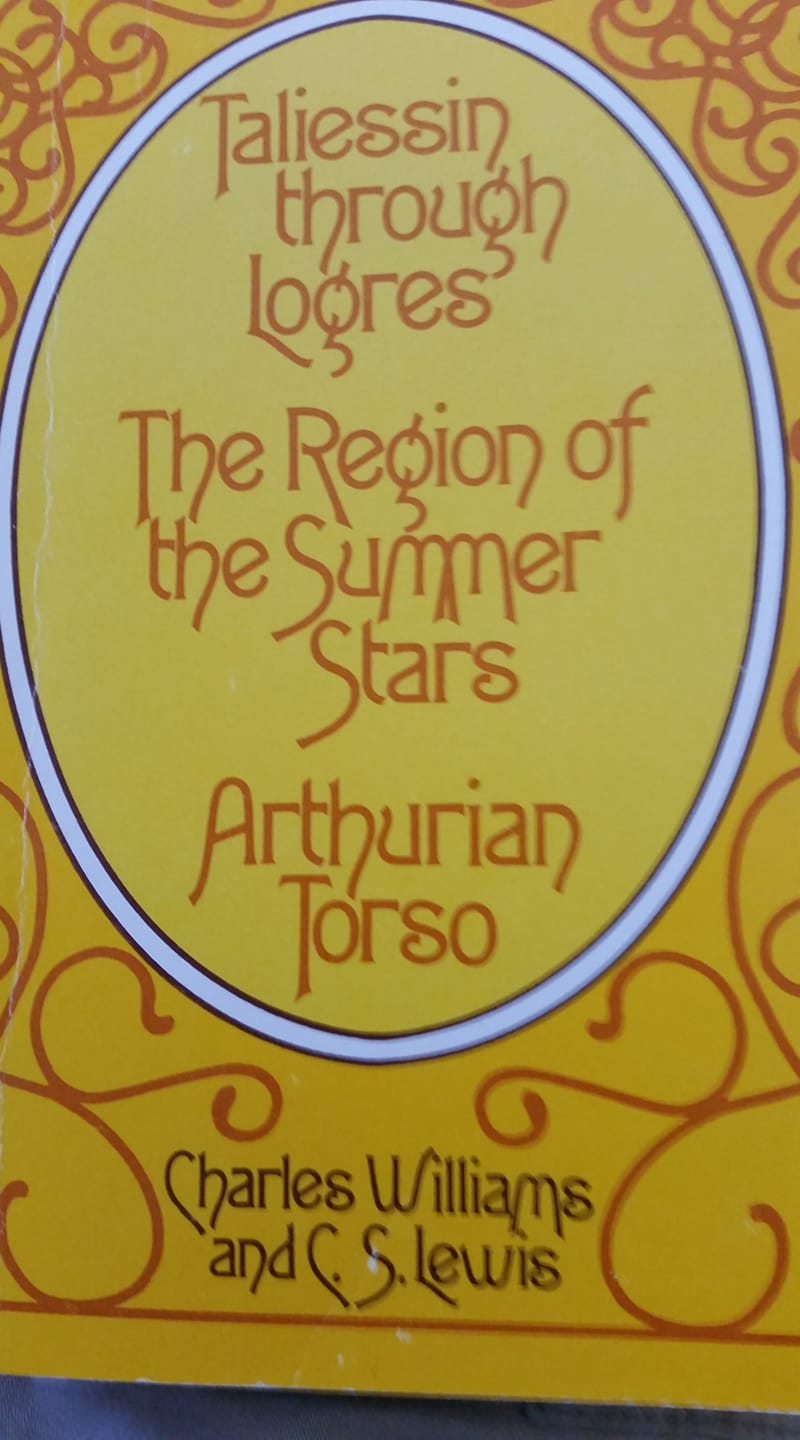
[1] In his Conclusions (chapter vi) to ‘Williams and the Arthuriad’ in ‘Arthurian Torso’ (1948), a piece known to David Jones. Lewis’s ‘Conclusions’ is fine example of a critic trying to explain why he thinks a poet is good while mapping out different types of ‘obscurity in modern poetry’.    
[2] The body of the essay is followed by two dated post scripts, postscript 2017 and post postscript 2019 respectively. One wonders what professor Dodsworth would think of a student who treated essay writing as live performance and didn’t simply rewrite the first draft to bring it in to balance and focus. 

Monday, November 25, 2019

What does this mean? The nonsense people write about poetry. Hannah Sullivan's 'Three poems' and The T.S.Eliot prize. 3/3

This is the final post of a set of three.
Cards on the table.
I think the highest praise a critic can give a poet is to say: this poem is well made, and then explain in what way it’s well made. In the best criticism the critic or reviewer doesn’t sound like they’d like to write poetry but, having been condemned to prose, is throwing out mellifluous waffle and hoping no one is paying attention. 
I often wonder if anyone is paying attention or if part of the game is to let the eye sweep down the page, coming to rest on the occasional phrase but never lingering long enough to ask ‘yes, but what does this mean’. It sounds good; file it away, then use whenever possible. 
Here, as antidote, is a random extract from page 77 of a book I’m currently reading which I think is excellent criticism: Neil Corcoran’s study of David Jones’ 'The Anathemata'. 'The Anathamata' may or may not be a poem therefore it does push the boundaries of what is a poem. It uses language in a way that challenges the reader and works a complicated set of symbols and allusions to suggest a very complex attitude to time, culture, religion and history. Corcoran has been steadily confronting the baffling awkwardness of the work, and trying to explain its excellence:
‘Assimilating, and developing from, a range of formal models embracing both the medieval intricacies of Langland and the post-symbolist obliquenesses of the The Waste Land, David Jones creates, in the Anathemata, an altogether new and entirely individual sort of poem’. 
Even without the discussion which preceded this, and the explanation which follows, there’s no doubt about what the critic is saying. 
Compare this with:
‘’Three poems’ are a sensual encounter with language. The combination of Sullivan’s disciplined couplets and riot of language create a memorable mediation on living and dying.’
And the problem is obvious.
This quote about ‘Three Poems’ is from the official T.S.Eliot Prize website. A review posted before the judges made their choice. 
It is approved and presented as an ‘unqualified verdict’. 
Instead of approving the conclusion someone should have asked the writer to specify what a ‘sensual encounter with language’ might be? Or to give an example by quoting a passage from the poem. Poetry blather rarely comes with supporting evidence. Make a nice phrase: pass on.
It’s not clear if the poems, the reader or the writer are having the sensual encounter, but it’s difficult to understand what ‘a sensual encounter with language’ might mean, though it does evoke a grubby character with a pornographic novel. All encounters with written language are sensual…they involve at least two of the senses. 
An encounter with sensual language, or an encounter with a language of sensuality?  Leaving aside such waffle, there is, finally, some kind of comment on technique. But it too is problematic. It does no justice to the variety of forms within and across the three poems; not all the pieces are written in couplets. Disciplined couplets evoke Pope and Dryden. But couplets are a formal discipline, so in what way is it a disciplined discipline? 
What is a ‘riot of language’? One of Joyce’s lists? Gertrude Stein? Dylan Thomas piling on the adjectives? 
 A riot suggests something destructive and out of control and Sullivan’s diction and syntax never feels anything but controlled.  
There is no example given of language rioting in a disciplined couplet. 
And so it goes:
The poem ‘Trains a steady gaze on the details of urban existence’. (define 'steady gaze?'). ‘The personal and the public combine in the crucible of Sullivan’s language into a disciplined, structured object of terrible beauty’ 
Language was rioting a few lines earlier. This ‘crucible of Sullivan’s language’ produces an ‘object of terrible beauty’. 
Acknowledging, as one is presumably supposed to, the nod to Yeats, one wonders how this is an example of  ‘Terrible Beauty’.  Comparing the Easter Rising with Sullivan’s domestic is a disturbing failure of proportion. 
I have the feeling that the critic is trying to claim that thinking about life and death and seeing them as interlinked is somehow newsworthy or worthy of praise. But that thought is too ugly to pursue. 
At this point I wanted to give up.  It’s too depressing.
‘Language echoes through time but, like cancer cells, which ‘divide interminably’ the nuclear chain reaction generates itself; life and death are one and the same’.
Sullivan’s final poem does link giving birth to a death, but it doesn’t in anyway suggest ‘they are one and the same.'  
And it would be foolish to suggest they are. Try that line on someone who has been told they have weeks to live. A ruthless killer could give you a choice between life and death.  If they were one and the same, there would be no difference and no choice. 
And so it goes.
There are two other aspects of this blather worth considering. 
Imagine.
You get on crowded public transport. You’re the last one on and you take the only available seat. The passenger beside you suddenly launches into a long description of her memories of New York. She remembers wanting to masturbate, but the batteries in her vibrator, her pink vibrator, were flat. She remembers meeting an ex-boyfriend at a party, and accepting his suggestion, ‘one more for old time’s sake’, she describes their sexual antics in detail, who put what where and what she felt and thought before during and afterwards.
You may have got up and moved away before this, but your presence was a mere excuse. It’s not in any way essential for the performance.
If a poem is simply the poet dumping memories on a complete stranger, then ‘why are you telling me this’ seems like a fair question.  I wasn’t there, I couldn’t substitute for the vibrator, or supply some spare batteries. Graphic sex with little context is one definition of pornography? 
What makes memory into art is craft. Byron’s confession about 100 sexual encounters in one week at Carnival becomes ‘We’ll go no more a roving’.  Wyatt’s memory of a good night in bed becomes ‘They flee from me’.  
Without craft the poem is just a letter to a stranger telling her or him what he or she never asked to know in the first place. Without craft you’re left with content, and 99% of content is not that interesting. Pretending that poems are philosophical tracts has the unfortunate habit of proving they are not. 
Because there is so little discussion of craft, (because it requires the critic to do some work?) the focus on content is often embarrassing. The pink vibrator gets quoted, apparently to prove that ‘Sullivan throws entropy into the system and reminds us that no fairground ride goes on forever’. This leads to the quote ‘You are thinking of masturbating but the vibrator’s batteries are low….’ 
Later ‘It is hard to say if there is progress in history’ is worthy of quotation because it strikes a ‘note of uncertainty’. 
At some point I was expecting a critical voice to praise Sullivan for her technical ability. Or at least to recognize her technical ability. This is the T.S.Eliot prize winner. Eliot, like Pound, fetishized technique. And got so far away from the egocentric confessional poem he created his own form of personal thumbprint. 
Instead there is, from Dust jacket to website, an apparent need to see ‘Three Poems’ as some kind of response or dialogue with either The Waste land, ‘Pound’nEliot’ or ‘High Modernism’. 
This does Sullivan a vast disservice. Instead of dealing with her poem, she is conscripted into a narrative that allows the reviewer or critic to sound erudite while continuing to say nothing important about her work.
‘The final sequence ‘The Sandpit After Rain’…debunks some of the more portentous aspects of High Modernist poetry.’ 
This is the same critic who wants to believe this poem is a thing of ‘Terrible Beauty’ meditating on life and death.
So portentous can be ‘of momentous or ominous significance’; ‘miraculous amazing, awe inspiring’; or ‘self-important or pompous’.
Which meaning is being used here? I’m going for the third. But then, isn’t describing memories in great detail while assuming a stranger will be interested, an obvious act of self-importance? 
Debunking the portentous aspects of etc is hardly new or news worthy. The habitual dragging of Tom’nEz into the discussion seems to gloss over the fact that we’re three years off the centenary of The Waste Land's publication. Writers have been ‘debunking the more portentous aspects of High Modernist poetry’ since about 1922. 
The poetry of Eliot’nPound can be read as personal responses to a culture that was irrevocably damaged by the first world war. But some of the tropes and techniques of those poets are as dated as the conditions they were responding to. To say instead of ‘I can connect nothing with nothing’ that ‘everything is now connected’ is not radical poetry or engagement with an antiquated set of poetic tropes, but simple observation.  
Sullivan is interesting because she avoids the tired trappings of modernist/post-modernist poetics. She’s interesting because she puts the personal front and centre within the context of a well-written, knowing poetics. 
One of the great millstones around the neck of anyone reading and writing poems today is criticism which says nothing about the poems it pretends to discuss. Having to ask, ‘What does this mean?’ indicates a failure of critical prose. It’s a shame to have to ask it so often.
End of exasperation.