Showing posts with label Vortigern. Show all posts

Friday, December 29, 2023

Lost Realms by Thomas Williams puzzling over value: style


Lost Realms by Thomas Williams (William Collins, 2022) 

Warning: Opinionating in progress.


Lost Realms  is a book with much to recommend it. The basic approach, ‘histories’ rather than ‘history’ is the only one that can deal with the ways in which Roman Britain became something else.  

What intrigues me most is two aspects of William’s style. He can write very well; evoke the landscape of post Roman Britain; negotiate the tangle of evidence and contending theories that characterise the period in clear and unambiguous prose. But so much of the book relies on the reader not paying attention. 


The following is a characteristic example of general style, and it illustrates two problems. The author is remembering climbing the steps to Tintagel as a child:


It felt endless that stairway-like the steps that ascended to the pass of Cirith Ungol from the Morgul Vale in Tolkien’s The Two Towers. (p.146)


You could delete everything from the dash to the full stop and the information would be conveyed successfully: 


It felt endless, that stairway.


It’s a common experience, especially for children. The author can rely on most readers  to understand his point (even if his intrusion of the memory into the narrative adds nothing especially relevant to the subject at hand). What follows the dash is superfluous in terms of information and is an attempt at ‘style’ but it's a strange thing to find in a history book. 


If this were a personal memoire of reading Tolkien, then the comparison would be at home if it were reversed. ‘When I read about the steps that ascended to the pass of Cirith Ungol from the Morgul Vale in Tolkien’s The Two Towers I remembered the steps that lead to Tintagel.’ p.146


This would be the normal movement, illuminating the fictional by comparing it with a real, repeatable experience that is not unique to the individual. Williams consistently goes the opposite way, trying to illuminate the historical by comparing it to the fictional. (More about this in the next post.)


But what happens to the reader (me, for example) who has no idea what Morgul Vale or Cirith Ungol are? That question points to an underlying assumption, and an impossible one: the assumption that the reader shares the writer’s fictional knowledge and his attitudes. Williams’ range of reference is eclectic: The Wicker Man, the Shining, Star Wars, the complete works of Tolkien. But no concession is being made to the reader. At one point rather than rewrite an unimportant but obviously obscure reference, he would rather add a footnote to explain his explanation. 


…that will embody an oddly retro-futuristic aesthetic, like the neo-Byzantine fantasies of the Trigon Empire…(p178)


The overall impression is that the author is not making an effort to communicate, rather, he is putting on a performance, and the performance assumes the reader shares his references, his fascination with his own memories, and his opinions. Which effectively means the Model Reader of this book can only be a model Thomas Williams. 


Sometimes this positioning is insidious: an anecdote will be introduced as ‘comic’ or ‘blackly comic’ rather than simply left to stand alone. Sometimes it’s unintentionally funny.


The story of Uther and Ygerna is, for modern readers, an uncomfortable read.


Stop. Which modern readers? All modern readers? Are we expected to believe that those who watched Vikings and Game of Thrones, or read Fifty Shades of Grey are disturbed by this? Some modern readers? Students in universities who are told to feel uncomfortable? 


But our author confesses:


I remember finding it troubling as a child and it stills leaves me feeling queasy. Not I think because the tale is in itself unusually unsettling (there are many, far more violent sentiments expressed in older Welsh and English poetry) but more for the horny relish with which Geoffrey tells it and the enormous appeal he clearly expected it to have for its intended audience…p146


I must admit I laughed aloud at this. The thought of Geoffrey writing 12th century erotica is almost as funny as thinking that what he wrote could have aroused your average clerical reader or titillated his ‘aristocratic’ listeners.  


Leaving aside the thought that horny relish sounds like a strange kind of novelty pickle, I wonder how many people reading this have read Geoffrey, or how recently or how carefully Williams has? If you’re reading this and have a copy of Geoffrey handy, stop now and read what Geoffrey wrote about Uther in Tintagel. It’s only a few lines. Does this sound like ‘horny relish’?  Then go back and read Vortigern’s meeting with Rowena: it’s not long either. Then remember what Geoffrey did in his day job. 'Deceived' is not a positive term.


But most people won’t stop and read Geoffrey. They won’t wonder which readers are disturbed, or whether horny relish is an accurate description. It sounds good. It sticks in the memory. The book, like many recent ones, relies on the reader never stopping to consider what the words on the page mean. The glib references aren’t meant to be examined, or even given any thought. The author is entertaining himself and scattering his references with no real interest in ‘meaning’. If the reader isn't meant to think too deeply about this; did the author? 


This might sound like I’m being over critical about trivial detail, but it leads to a discussion of how the material is presented and understood, for which see next post. 


Wednesday, January 11, 2023

A Man of Heart is now available


A Man of Heart, my version of Laȝamon's ?13th? Century version of the story of Vortigern and Britain in the fifth century, is now available from WWW.Liamguilar.com and direct from the Publisher at Shearsman

Either link will open a new window. 

Wednesday, September 28, 2022

Publication; Chapter eight of the story of Vortigern.


A QUEEN IN THE WILDERNESS. 

Chapter eight of my story of Vortigern, is online at the Brazen head.


https://brazen-head.org/2022/09/27/a-queen-in-the-wilderness/


The full story will be published as A Man of Heart, (Vol 2 of A Presentment of Englishry) by Shearsman Press, UK, in early 2023.


Monday, June 6, 2022

Publication: The story of Vortigern, Chapter seven.


Chapter Seven brings part one to a close.   You can read it by clicking on the link below. (The first picture above shows an Anglo-Saxon building reconstructed at the Experimental Archeology site at West Stow. The second shows looms in one of the buildings.)   


https://brazen-head.org/2022/06/05/chapter-7-the-good-old-days/

Friday, March 11, 2022

Publication. Chapter six of the story of Vortigern. The Wasshail ceremony.


The Wasshail ceremony, in which Rowena meets Vortigern.

You can read the chapter at this link. Clicking on it will open in another page on The Brazen Head web sight..

 https://brazen-head.org/2022/03/11/chapter-six-the-wedding/


Friday, December 31, 2021

Publication: Chapter five of the story of Vortigern


The story of Vortigern continues. Chapter five is now up on the Brazen Head, and can be read at the link below.

While Vortigern's story might have an historical basis, this chapter is the first major slide from history as we might understand it to a narrative that feels more like a folk tale.


https://brazen-head.org/2021/12/30/chapter-five-an-age-of-wood/


The story of Vortigern is the second of three stories taken from Laȝamon's late 12th Century 'Brut'. The first story was published as A Presentment of Englishry, by Shearsman books.


Thursday, October 14, 2021

What does it mean to 'believe a story'? Vortigern, Fiction, History 3/3

This is the third post. History and Fiction have been dealt with in the previous two. 


If Layamon isn’t writing ‘History’ or ‘Fiction’ in the modern sense, what was he doing? Or, to reframe the question, how did the original audience ‘receive’ his text. There’s no way of answering that definitely, not least because we don’t know who that original audience was, but asking it will lead us to some interesting places.  

Most conscious reading is based on learnt reading practices. You learn that ‘History’ is different to ‘Fiction’ and there is an assumption that they will be ‘read’ differently. 


When you read the bizarre happens at the funeral of William 1st, or the Angevin’s victory at the second battle of Lincoln, and you read them in a modern history book, you should assume they did happen. Credibility should not be an issue. Whether it sounds improbable to you as reader is irrelevant. (Or should be, but that’s a different matter.)


When you read Lord of the Rings, you ‘believe’ in the story world while you’re reading, but afterwards, unless you are disturbed or unbalanced, you know there are no Hobbits and never were. Tolkien was writing fiction; he invented them. Modern Fiction is an elaborate form of socially sanctioned lying. 


Take out the safety rails of modern genre, and it becomes far more complicated.


What does it mean to ‘believe a story’? 


A long time ago, Nancy Partner wrote ‘Serious Entertainments’ and pointed out that the dividing line between what we call Medieval Romance and the History of the Chroniclers was so thin that apparently the best educated people could not distinguish truth from false hood or were prepared to accept quantities of complicated, distant or unusual information on the assurance of one informant who might have got their information second hand….’Worst of all, [they] had a sense of probability that apparently excluded nothing’ (Partner, p. 185).


This is a generalisation and like all generalisations isn’t completely true, if it were, William of Malmsbury and Gerald of Wales’ distrust of Geoffrey of Monmouth would be impossible. And the recent pandemic has proven the same description could be applied to sections of the modern community. 


But my question is, what does  ‘accept’ mean in this context? 


There are certainly incidents in the Brut which must have seemed credible to the Audience because they echoed events which would have been comfortably familiar. 


At the start of the Brut, Brutus Kills his father in a hunting accident. That would have rung a bell with some of the original audience who remembered the death of William Rufus.


Civil wars, rebellious royal sons and fractious royal brothers? If Lawman is writing at the end of the twelfth century, every King of England from William 1st to King John had either been involved in the first or could be described as either or both of the second and third. It’s difficult not to read the Brut as a sly commentary on the Angevins. It takes a conscious effort to pull back from that thought and remember Geoffrey set these stories rolling in 1130.


But then take all the Kings from Alfred to John, would any one of them have fallen for Hengist’s bulls hide trick? (see previous post). Name one of those Kings who is tricked in a similar way?


Up to the end of the twelfth century, name an English or Norman King who puts his kingdom in jeopardy or his rule in danger, not just to satisfy his lust for a single individual but to go so far as to allow that individual’s family to dominate him. (It does happen, but much later). Yet this is the central, repeated story in the Brut. 


The nearest relevant example I can think of is King John, whose marriage to Isabel of Angouleme was politically disastrous. But even if he was swept off his feet by her beauty, her lands were equally attractive. The marriage wasn’t a disaster in itself. John’s treatment of Hugh of Lusignan, who was betrothed to her, was thoughtless, heavy handed and inept. But ironically for this discussion, that seems to have been in keeping with what we know of John’s character. Since that marriage didn’t happen until 1200 it can’t have been a model for the story. 


The assumption seems to be that the audience ‘believed’ these stories, the way Layamon ‘believed’ a note saying his Bishop was arriving tomorrow to visit to check up on his behaviour as Parish Priest, or news that the French had landed and were marching on London.  


But Layamon’s audience, if it were local, would remember stories about the Anarchy, or the Civil wars that rumbled on from Henry II’s reign. Some of them might have participated. Did they believe that a body with fifteen wounds, the smallest of which you could put your hand into, would survive? 


Or to take an earlier example, Nennius records that at the battle of Badon, nine hundred and sixty men of the enemy were killed by Arthur, in a single charge, and ‘no one laid them low but he alone’. Did anyone ‘believe’ that? Did the audience ‘translate’ it to ‘Arthur killed a lot of people’? Because otherwise no one apparently stopped and worked out the maths? (10 hours of daylight? 600 minutes? 1.6 deaths every minute non-stop for ten hours? That’s an impressive ‘single charge’.)   


Or, do we need to accept that a response to a story is never as straight forward as ‘accepting’ or ‘believing’ might imply.  


These stories exist in a world of storytelling which exists ‘over there’, where, for the length of the story, the audience might ‘believe’ the way some people entertain the existence of Hobbits or Aliens while reading.


There’s an obvious gap between what people knew and recognised as lived experience, and what people were willing to entertain within a story. But whether or not they ‘believed’ it, or ‘accepted it as factual’ is a different question.  


Which raises all sorts of problems for someone trying to retell it. And all kinds of interesting suggestions about how the legendary history made sense of the past for the people who used it. 


It has serious implications for the dubious idea that you can read ‘values attitudes and beliefs’ straight from a fictive text. Or that studying ‘representations’ in fictive texts is a meaningful and straightforward activity which reveals truths about the author and original audience. 


And it also suggests, perhaps, that reader response theory might not be transhistorical but bound to the learnt reading practices of the twentieth century. 


Who said Medieval Lit was dull? 

Monday, September 20, 2021

History and Fiction in Laȝamon's Brut 2/3


‘Fiction.’ 

(for 'History' see previous post)


So Laȝamon isn’t writing modern History. That’s not really surprising. ‘History’ was split decisively from ‘fiction’ over a century ago, but ‘written fiction’ is just as artificial a construct as ‘history’.


Everyone tells stories from the time they can talk. But ‘fiction’ is conventional. And the rules governing it are as artificially made and as historically contingent as the rules governing the writing of ‘history’.


A modern fictional character is a proper noun, with a cluster of attributes and actions. In modern fiction the attributes and actions should be motivated and consistent. Would-be novelists are advised to ‘know their characters’, to work out ‘the back story’, to creat lists of likes and dislikes, even if these won’t appear in the novel.  Apparent inconsistency is risky but permissible, if the narrative explains the inconsistency. 


One of the underlying fictions of both history and fiction is that humans are rational and their actions are coherent, motivated and understandable by a third party. 


Which brings us back to Vortigern as Laȝamon presents him. 


Laȝamon makes no attempt to supply Vortigern with motivation. He flashes onto the screen as a fully-fledged power hungry villain . He’s ready to do anything to get it. That I could cope with. His past, what makes him who he is, is a blank. I can cope with that too though I find myself shading it in as I go along. 


But once he’s in power the story becomes difficult. There’s nothing unusual in his willingness to hire Germanic mercenaries. This was standard Imperial practice. 


But then we come to the story of Thongcaester and how Hengist the mercenary tricks Vortigern into giving him land. 


When Hengist asks for land, initially, sensibly, Vortigern refuses the request, knowing his people will object if he gives land to the pagan Hengist. Hengist then asks Vortigern to grant him as much land as can be covered by a bull’s hide and oblivious to what’s coming, Vortigern agrees. When he’s found his ideal spot, Hengist has the bull’s hide cut into a single unbroken thong which allows him to map out a large plot of land where he builds Thongcaester.


At which point you’d expect any real, hard-headed military leader to have said, listen here, chummy, that’s not what I meant and you know it. But our man doesn’t. He just accepts it. It feels like the narrative has been conscripted by one of the Clever Hans type folk tales you find in the Grimm’s collections. 


Hengist now sends for his wife and daughter. The wife is never mentioned again. But the daughter is trouble. We are now asked to believe that having allowed himself to be cheated out of land, Vortigern is going to jeopardise everything he’s worked for, to get his hands on a pretty girl. I don’t buy it. I see no reason why the leader of a group of mercenaries wouldn’t marry his daughter to his boss as part of family politics. But such a business transaction should have been hedged around with conditions. Blind Freddy can see that making your servant your father in law shifts the power balance in a dangerous direction. 


Nor does it make sense that Vortigern doesn’t insist she convert to Christianity first. It’s not as though he’d be waiting for her to take a theological degree. We’re asked to believe that he’s so besotted with her that he can’t wait to get her into bed and therefore skips the whole Christian marriage ceremony, although he must know it will annoy his British subjects and alienate the Church, which will not (then or now) accept the union as binding. He also gives away Kent as her bride price which is also guaranteed to infuriate both its current owner and his supporters. 


I want to know how the original audience responded to this. 


And that will take us to the observation that something odd is happening in these stories with implications that go far beyond my interest in this narrative.

Thursday, September 16, 2021

Vortigern: history, fiction and the strange relationship between the imagined and the known. 1/3


Part one of three.

History.


I’ve finished the first draft of the story of Vortigern. And I’m still nagging away at what I can learn by trying to rewrite a medieval story. I’ve tracked the story of Vortigern and how it changes from Gildas, via Nennius to Geoffrey of Monmouth and Wace, to Laȝamon. (see previous posts on Vortigern)


Chapter one of my ‘versioning’ appeared in Long Poem Magazine, chapter two, three and four in the Brazen Head. 


To make the story work as a modern narrative, I’ve had to make changes. It’s the reasons for these that intrigue me.


But the more I do this, the more I’m beginning to believe that while there are obvious differences between the middle ages and now, if you strip away the technology, sometimes the differences are not as profound as they first seem.  


Take the twin ideas of ‘History’ and ‘Fiction’. It’s obvious twelfth century writers didn’t treat these ideas the same way we do. But then, who is the ‘we’ in that sentence. 


‘History’ revisited.


Laȝamon’s version of history, like all the other Medieval writers in my list, is a record of individuals and their actions. The Picts attack Britain because Vortigern betrayed them. Roman Britain falls because Vortigern can’t control his lust for Hengist’s daughter. 


A modern Historian might explain the fifth century in terms of ideology and economics, as the inevitable result of internal and external pressures working on a weakened western empire. They will debate migrations, elite take overs, continuity vs change etc. They are unlikely to look to the actions of a single individual for explanations.


Which brings home the nature of ‘History’ as a modern discipline. For all its basis in facts and evidence, it is still an attempt to narrate the past, but to narrate it in order to know it in a peculiar way. If it ever succeeds, ‘it’ will ‘know’ the fifth century in a way no one living in it ever did. Firstly because the fractured, localised experience of life in the fifth century cannot compete with the Historian’s overview. The written materials that do survive were written by people who could only write what they knew and what they knew was limited. 


Secondly, modern technology can measure time to a Zepto second: That's a decimal point followed by 20 zeroes and a 1, and it looks like this: 0.000 000 000 000 000 000 001. It’s unlikely that anyone is aware of time passing in such small increments. A modern ‘History’ of the fifth Century in Britain often seems to be based on the assumption that the past can be known with such objective precision. We have DNA testing, increasingly sophisticated dating techniques etc.etc. which leads to an increasing unwillingness to accept anything unless ‘scientifically proven’. And in extreme cases the strange attitude that says since there’s no evidence for roaming war bands in the archeological evidence there were no roaming war bands. 


But just as you can’t remember a zeptosecond that occurred last week, people living through the fifth century responded to what they thought they knew, not to the objective ‘truth’ of the situation. Modern 'history' may well prove them all to be deluded, and their writers were mistaken, exaggerating, or lying but that won't help us understand them. 


And before we dismiss Laȝamon’s approach as ‘medieval’ it would be instructive to compare his treatment of Vortigern with journalistic treatments of the recent Trump Presidency, or of Alexander Boris de Pfeffel Johnson, or even Scott Morrison. (I’m not going to do that, reading about these gentlemen is depressing enough without spending more time thinking about them than necessary.)  

Power, politics and current events are presented by the modern news media in terms of personalities. The systems that made a Mr. Trump or Mr. Johnson inevitable are rarely discussed. Their personality, actions, words are. Laȝamon and his audience would be completely at home. 


And (#2) before we dismiss the medieval writer for his willingness to include the obviously fantastical or irrational, some of the vociferous responses to the Government’s attempts to get everyone vaccinated against Covid might qualify the idea that we are living in a more rational age.


For most people ‘History’ as a discipline is something they brushed against at school. It’s not the way they think about the present or the past. 


And watching the state governments respond to the threat of Covid-19 in Australia, I’m not convinced that the actions and choices of the individual players aren’t capable of affecting history. 


In the next post, Fiction medieval and modern. 

Sunday, July 18, 2021

Sex, Gilgamesh and Uther Pendragon. Jenny Lewis' 'Gilgamesh Retold'.


I assumed that anyone reading, writing or translating texts from the distant past is probably?Inevitably? going to encounter incidents, speeches, attitudes, actions, the list is long, that they would think are unacceptable as the thoughts, actions, behaviours etc. etc. of modern people.


The question then is, what to do with those incidents. 


Looming on the horizon for me is the story of Uther and the conception of Arthur. It’s the third and final story in the sequence I started with A Presentment of Englishry. But the closer I get to finishing the second story, the story of Vortigern, the less I know if I should do the third, or if I do it, how I should approach it. 


While thinking about this, I’ve been reading ‘Gilgamesh Retold’ by Jenny Lewis. It’s an impressive performance. 


I don’t want to detract from Lewis’s ‘Gilgamesh’, her scholarship or her poetry but there’s an Afterword where Lewis discusses the text and her translation and it is a succinct example of my problem.


In the Afterword she describes her discomfort with the incident between Shamhat and Enkidu. To domesticate Enkidu the wild man, Shamhat the temple prostitute is sent into the wilderness to introduce him to sexual intercourse and thus humanise him. 


Lewis describes the incident as fraught with ‘cultural anachronisms’. 


For a start the idea of a holy or sacred prostitute would seem to be a contradiction in terms to a twenty-first century reader but in ancient Sumer there doesn’t seem to have been any stigma attached to sex and certainly not to temple prostitutes in service to Inanna.[…] Even so, being told to trek three days into the wilderness and lie naked as lure for a gigantic hairy wild man (probably with bad personal hygiene) seems monstrously abusive and pornographic in any century. My way of dealing with this was to interpret it as a ritual, similar to the annual symbolic couplings between Inanna’s High Priestess and the king to ensure abundance in the land […] In my version Enkidu approaches Shambat gently and sings to her to reassure her; Inanna looks down on the couple , turning their lovemaking into something holy or supernatural (rather than bestial).


We should acknowledge the possible pun in ‘pornographic’ given the word’s etymology. But it seems to me that this doesn’t solve the problem. Whether Enkidu approaches her singing or snuffling doesn’t change the fact she’s been told to go teach him about sex. 


So a response in two parts. 


What isn’t ‘culturally anachronistic’ in Gilgamesh? He fights gods, kills the bull of heaven,  defeats a monster to steal his trees and travels to encounter the immortal survivors of the great flood.  


What wasn’t ‘monstrously abusive’ in Sumerian society by modern standards. The builders of Uruk’s walls weren’t working for the fun of it. They had no more control over their bodies than the temple prostitutes.  


Why have ideologies of sex and gender become such a focal point in the world of poetry and academia? The walls of Uruk are Gilgamesh’s glory, but he didn’t build them himself. Forget the poor who were conscripted to build them, but worry about the temple prostitute told to have sex with a man ‘with bad personal hygiene’? 


If we were to baulk at the incident in the name of ‘twenty first century readers’ doesn’t it also require us to assume that all ‘twenty-first century readers’ share the same values?


‘Twenty first century readers’ made Fifty Shades of Grey an international best seller. Recently I’ve been looking at generic fiction, both on screen and in print. There’s violence, sadism and sex, sometimes all three at the same time in the guise of entertainment. I’m not sure why, but you can, if you want to, watch people being tortured on your screen in the comfort of your own home. Your average ‘made for’ streaming service series has regular explicit sex which adds nothing to the narrative and goes on long enough to blur the distinction with pornography. Where I live the licenced brothels advertise themselves in the classified section of the local paper. Presumably the people who run them and use them, and that includes the paper who takes their advertising money and the government who taxes their profits, don’t find them ‘unacceptable’. 


The idea that ‘we all’ find x y z unacceptable is obviously untenable. If I were writing Uther’s story for HBO would anyone blink?


But since I do not want to contribute to the pervasive sludge, the observation doesn’t solve my Uther problem. 


In part two, he considers the idea of rewriting the text to make it acceptable for ‘modern readers’.


As of now I have no answer to any of this.


Except to say how much I admire Jenny Lewis’ ‘Gilgamesh Retold’. 

Monday, March 1, 2021

Vortigern in London


Chapter two of my version of the story of Vortigern is up at the Brazen head (link below) 

Chapter one will appear in the next issue (#25) of  Long poem Magazine. 

The story of Vortigern follows on from where A Presentment of Englishry (2019) left off...


https://brazen-head.org/2021/02/28/britannia-in-peril-an-extract-from-an-epic-of-britain/

Monday, July 20, 2020

'Ruins', the story of Vortigern, is published in Long Poem Magazine spring 2020

'Ruins' is a long poem, 7 pages long, which tells versions of the story of Vortigern.

 In the 6th century, the remnants of a broken army, fleeing for the Welsh hills, find shelter in a ruined villa. To get through the night they tell the story of Vortigern and the Fall of Britain. But they have also found an old man hiding in the ruins, and he is adamant that he was a participant in the story they are telling. His version of events does not agree with theirs.


For someone interested in stories and storytelling there was so much to play with.

Although written to stand alone, 'Ruins' is the overture to a full length story of Vortigern, which will follow on from 'A Presentment of Englishry' (Shearman 2019).

You can hear a reading of an earlier attempt at this here: The poetry voice Podcast

Friday, April 3, 2020

An extra ordinary moment in Lawman's Brut: Vortimer meets Saint Germanus

Vortimer is the eldest son of Vortigern. He has a very small part in the Legendary History. After Vortigern marries Rowena and begins to show favouritism to both Hengist’s people and his religion, the Britons rebel. They choose Vortimer as their leader. As is usual in the Brut no reason is given for the decision, and no evidence is provided prior to the election of his character or actions.  However, he immediately demonstrates his abilities by defeating Hengist. He offers a bounty of twelve silver shillings per Saxon head. When Hengist has been driven out after four battles, and Vortigern has fled, Vortimer asks for help from Rome to re-establish the church. This is the context of St Germanus’ visit. 

When the saint arrives Vortimer makes a speech to greet him. The speech is not in Wace. He begins by introducing himself. In the standard way of the Brut this means naming his father, which gives him the opportunity to twice say Vortigern has been led astray by the German woman. Vortimer then boasts of his victories over Hengist. And there’s not much that’s startling about anything in this until the speech suddenly shifts gears and becomes extra-ordinary. It’s one of the minor eruptions in the Brut  which are easy to miss.


& we scullen an londe; luuiæn ure Drihten.      
Godes folc ur((o))frien; & freond-liche hit halden.      
wurðen mils liðe; wið þa lond-tilien.  
churichen we scullen hæhȝen; & hæðene-scipe hatien. 
Habbe alc god mon; his rihte ȝif Godd hit an.    
& ælc þrel & ælc wælh; wurðe iuroeid.    
& here ich bi-teche eou an hond; al freo ælc chiric-lond. 
& ich for-ȝiue ælchere widewe; hire lauerdes quide.  
& þus we scullen an ure daȝen; aniðeri Hengestes laȝen.    
& hine & his hæðene-scipe; þæ he hider brohte.      7408-7417

(source is the superb ‘Corpus of Middle English Prose and Verse” https://quod.lib.umich.edu/c/cme/LayCal/1:75?rgn=div1;view=fulltext)

‘& ælc þrel & ælc wælh; wurðe iuroeid.’  And free every slave and thrall? The promise to free people is absent from Cotton Otho. I’d like to consult the various translations to see what has been made of these lines, but that will have to wait.  

Slavery was an integral part of both Classical and Old English society. It came to an end in England with the Norman conquest and the development of new ways of tying people to the land. Here is a fictional king with a dream of freedom, who cares for all of his people. And is willing to enter into some sort of contractual arrangement with the Church as institution. 

The Brut rarely admits the non-heroic poor. Kings and their retinues are the focus of the story. But not only are the non-Heroic being admitted, they are being promised freedom and the implication is that this is the Christian thing to do. Widows too are being forgiven their husband’s debts. Laȝamon's ideal kings are ruthless war lords, and Vortimer is no exception. But here is something that looks like an attempt to imagine a Christian society. 


Nothing comes of this because Vortimer is about to die, a victim of English Literature’s first wicked step mother. Here in Quarantine, a long way from my books, I can’t check this, but I wonder how many of Laȝamon's King’s share such an ideal? I’m reasonably sure that the answer to that is very few or none. I don’t remember anything similar in Arthur’s reign.

In the Prologue to the Brut, Laȝamon is identified as a priest. This explicit identification has exercised its own gravitational pull on scholars, sometimes in a detrimental way. But whatever you know about ‘Author Functions’ and the danger of succumbing to them, it’s so very tempting to see this insertion as our Priest’s attempt to imagine what an ideal Christian King would do: Not only would he trash his enemies; he would establish a contractual relationship with the Church; he would look after widows; he would care for the poorest and least powerful of his people. 

It would also be tempting to then go one step further and read this as the author’s reaction to the church’s ongoing problems with the Angevins…particularly with Henry II and John, with some of the clauses of Magna Carta echoing around to confuse things.

Did the garbled story of the historical Germanus, which I’ve been tracking here, give him an opportunity to suggest what a genuinely, radical Christian King might do? Did he put his own ideals into Vortimer’s mouth? 
    

Thursday, June 13, 2019

What are the differences between early Medieval poets and Modern ones? Part 1

My working theory is that I can learn about Laȝamon and his process by rewriting his text. The process is steadily illuminating aspects of his work that I would not notice if I were approaching it from a literary critical/historical/academic perspective. 

One of the major differences between Laȝamon as a writer and his modern descendants can be seen in the way he retells the story of Rowena. What he did, and what I feel obliged to do, are very different. 

But first an important general point. 

Medieval authors often appear inconsistent. Sometimes this might be the result of inaccurate copying. Sometimes, however, I think it points towards a much more interesting difference in their practice. 

In Geoffrey of Monmouth, Ambrosius launches into a diatribe about the sins Vortigern has committed. It’s excessive in length. It’s also inaccurate. What he says doesn’t match up with the story we’ve just read. Ambrosius accuses Vortigern of betraying both Constantine and Constans, the father and brother of Ambrosius and Uther. 

The second charge is indisputably true. But nowhere in Geoffrey’s text, describing the brief career and death of Constantine the father, is there any mention of Vortigern. Constantine is knifed by a Pict.  

If this diatribe had been written by Robert Browning we might see this as a subtle way of suggesting hatred has unhinged Ambrosius. But inconsistency seems not to have bothered Geoffrey or his subsequent translators.

Wace, following Geoffrey, has Constantine stabbed by a Pict, who had been in his service but had begun to hate the King: ‘I do not know why’. But when he comes to Vortigern’s death, Wace repeats the accusation that Vortigern has slain both father and brother. He refers to it twice. Once ‘in text’ and once in words that he gives to Ambrosius. Had he flicked back a few pages, he could have checked and seen that this is wrong.  

Laȝamon does the same. He expands and dramatizes the initial treachery, giving the Pict a name and lines to speak. He describes the assassination. Wace’s ten lines became 21 long lines (or 42 short lines in Madden’s edition). 

The scene obviously caught his imagination. He makes no mention of Vortigern. 

When he gets to Vortigern’s death, Laȝamon leaves out the long speech. No Robert Browning effect here. Instead, Ambrosius makes a grim joke about keeping warm. Then Laȝamon follows Geoffrey and Wace in repeating the accusation that Vortigern killed both father and brother. 

Either they couldn’t check what they’d read, which is unlikely; they had forgotten what they had written, which in Laȝamon’s case seems improbable, or it wasn’t important. 

Considering why it wasn't important, points towards an essential difference between Medieval and Modern writing which will be the subject of the next post.

But you can discover it for yourself by considering how you would film the scene where Rowena  murders Vortimer?  

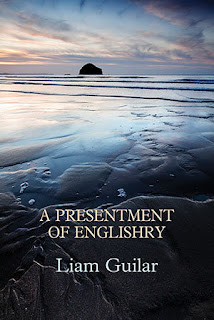
A Presentment of Englishry is published by Shearsman UK and is available from The Book Depository and Amazon. Signed copies are available from www.liamguilar.com

Tuesday, April 23, 2019

Who was Hengist's daughter Part 2

In which she first appears, silent, serving the booze.

Hengist’s daughter first appears in the Historia Brittonum, which may or may not have been written by ‘Nennius’ and is dated to the early decades of the 9thCentury. 

She is not given a name. Hengist holds a banquet for Vortigern and tells his daughter to serve the alcohol. When Vortigern is drunk, Satan enters into his heart and makes him desire the girl. He asks for her and offers half his kingdom in return. Hengist asks for Kent, the deal is struck and Vortigern marries her. The girl disappears from the story. Later, we are told Vortigern favoured the barbarians ‘because of his wife’, and even later Hengist saves him from the massacre of the British leaders ‘for my daughter’s sake’. When, St. Germanus prays Vortigern to death in his tower, ‘he dies with all his wives’.

That’s all. 

More words are spent on Vortigern’s incestuous relationship with his own daughter or on the confused and equally pointless encounter with Merlin. 

Although four centuries separate the story from the time it’s set in, historically, its bones are not improbable. If the leader of a group of mercenaries had a daughter, he might marry her to his employer as a way of improving his own situation.

But the Historia Brittonum reads like an accumulation of anecdotes. And this anecdote sounds like a shard of a folk tale. The only thing we learn about her is that she is beautiful and she is Hengist’s daughter. Her only recorded action is to serve drinks at a banquet. She has no character. She’s not an Eve type, tempting Vortigern. The devil enters his  heart. Her sole value lies in her relationships to men: Hengist's daughter, Vortigern's wife. It’s not even possible to call her a passive object of desire: she has no opinions or reactions. She does not speak. 

However, if the bones of the story are not improbable, the details are. The audience is asked to believe that the ruler of Britain, a hard-headed war-lord, is so smitten by this girl at their first meeting, that he will trade half his kingdom, alienate his supporters and his sons, risk his life and position and put himself in Hengist’s debt so that he can get her into bed as fast as possible. That does seem improbable. 

It has been suggested that by the ninth century there were two versions of Vortigern’s story circulating amongst the British storytellers. In one he is an honoured ancestor. In another a villain who is responsible for the downfall of Britain. 

The Good Vortigern story eventually disappears. There’s no reason to think Geoffrey of Monmouth knew it had existed. 

The story of Hengist’s daughter makes sense as vilification, if Nennius was supporting his patrons by blackening the reputation of the ancestor of a rival dynasty. For the clerical, Christian writers of the middle ages, sex was dangerous. Excessive, uncontrolled sexual desire was an obvious external marker of an evil character.

Vortigern’s inability to control his desire for Hengist’s daughter is mirrored by his inability to control his desire for his own, with whom he has an incestuous relationship. Both relationships indicate the flawed moral character of the man. As vilification it makes sense, as history, it’s an almost irrelevant slur.

But in this folk tale, the nameless girl might signify Vortigern’s failure as a ruler in other ways. Not only is he is dangerously incapable of controlling his desires but he inverts the relationship he should have with his mercenary. He asks permission when he could demand, offering to buy the girl from his inferior, putting himself in the subordinate position. 

I don’t know which marriage customs are supposed to be operating here but there’s no sense that Hengist is offering any dowry to the bridegroom.

From this limited beginning, the story will be expanded, first by Geoffrey of Monmouth, then by Wace and Laȝamon. It’s possible to watch each storyteller interpreting the story he inherits. The later writers obviously felt something important was happening but in seeking for narrative coherence and significance in their sources, they made explicit what is not suggested in the original. By the time Laȝamon was finished with her, Hengist’s daughter, named and acting of her own volition, will be an essential part of a recurring pattern that structures the Legendary History. 

Which is the next post in which she gets a name and does more than serve the drinks.


Sunday, April 21, 2019

Who was Hengist's daughter?

A Presentment of Englishy ends with a poem that looks forward to the story of Vortigern, Hengist and his daughter.

The Matter of Britain
(Western Britain, 450 AD).

Mog the Magnificent
in his daub and wattle hut
lord of the scattered rocks
and the wind scarped ridge
watching the sheep he’s counted
penned on the wet hillside.
The members of his retinue
huddled round the fire,
dozing. The harper
droning stories of Vortigern
Hengist and Rowena.

They say it’s easier to look into the sun
Than look at her. They say,
she is the dawn and when she rises day begins.

Vortigern, traitor,
expert in evil,
skilled in deceit
sold his country
for a pagan witch.

Hengist, a cunning man,
a secret, silent, scheming
man, who pimped
his daughter for a crown
he could have seized.

But I was there when Rowena walked into the hall.
She lifted up the goblet, ‘Wes þu hal, Vortigern cyning’
and I swear, Hengist had pitched her at the son
at Vortimer. She swerved. She chose
and with that choice swerved history and Britain fell.


Anyone who reads A Presentment carefully will know that that last italicised section should not be taken seriously as historical fact.

But who was Hengist’s beautiful daughter?

In the next post, her earliest appearance in ‘The Matter of Britain’.