Sunday, January 7, 2024

Taking Possession. A story of the Norman Conquest.

 This poem, the second experiment in telling a story in verse, aiming for a scrupulous meanness in the diction, was first published in The Brazen Head.


Taking Possession.


Normans on the great north road

somewhere in England in 1071.[i]

Hubert, lord of these grey riders,

fought at Senlac, and since then

has been useful to the King

His reward, the manor he rides towards,

larger than the home he left in Normandy.


Walter, his seneschal, riding beside him, 

fought at Senlac with distinction,  

rallied the savaged in the Malfosse .[ii]

Between them, non-armoured, long haired, 

Aelfric, an Englishman. Their local guide.

Their translator. He makes them awkward

in ways they’d struggle to define. 

If pushed, Walter might reply; 

he has no scars: his hands are soft.


The manor is wooden, unfortified.

Too easy to attack and futile to defend.

All this, thinks Hubert, I will change.

After the automatic military appraisal, 

the childlike revelation: this is mine.

All mine. A group waits, women, children,

men so old they can’t stand straight.


The lady of the manor steps towards him.

Hubert remembers that in the English time

she could have run this place without a husband.

Now she and it are forfeit to the crown, 

the crown bestowed them both on him

and he has come to take possession.

That thought will take a long time growing old. 

He examines her the way he will inspect the cattle,

fields, fish weir and the little mill.

Tall, straight, young, blonde: she will do.


‘Where are the men?’ Vague images  

of those long legs, fine hips and breasts

do not make him stupid. ‘Where are the men?’

He has lost friends who were not so cautious,

in this green folded landscape, where the trees

and ditches hide those desperate for revenge. 

Aelfric translates the question.

‘Where you should be.’ He ducks his head

til he remembers he rides with the victors

and she’s the one who lost and all her pride

will not avert the fate that rides towards her.


‘Her brothers, father, uncle, nephews died 

at Stamford bridge and Senlac hill.

Their tenants and dependants died with them.’[iii]  


The idea that Englishmen are long-haired, 

beer swilling, effeminate, will creep 

into the Norman mind but not in Hubert’s 

even if he lived a long and idle life.

Those longhaired drunkards stood their ground,

all day. Charge after charge breaking 

on that obdurate line of shields.  

Anyone who’d seen a horse and rider split

by one swing of an axe would think twice 

about disparaging the man who swung it.

But Aelfric swung no axe. That much is obvious.


2


After inspecting the boundaries, 

a wary country ride with scouts,

after the inspection of the manor house, 

after the welcome meal, Hubert decided 

it was time to inspect his human property.

The men at arms were organised.

Guards posted, tasks allotted.

Walter thanked, allowed to leave.


Hubert talking to his Lady through Aelfric

was reminded of those shields.

When he was polite, she seemed insulted.

When he had tried to show an interest 

she had seemed offended. He sensed 

that what he said was not the words she heard.

She was nobility, understood the world

and what would happen next and so he doubted  

his tame Englishman was being honest.

He would have to learn her language,

some words at least, while she learnt his. 

Bed, he thought, could be his classroom.


He stood up, took her hand. She did not move. 

‘If you don’t go with him’, said Aelfric  

he’ll strip you for his men at arms.’

It was a stupid lie. This Norman was no fool

who’d break his prize possession out of spite.

Aelfric ignored the look she cut him with.

Once she’d been too proud to notice his existence

now she was this Norman’s mattress 

and whatever in his character was broken, 

or unfinished, rejoiced at her humiliation.


The curtains closed behind them. 

Aelfric edged towards the drapery, 

heard the sound of fabric falling, 

imagined the pale body emerging. 

He heard Hubert’s belt and sword unbuckled  

then set down, heard them move together.

Imagined his hands, heard Hubert grunting, 

then making garbled noises like a stricken pig.


A female hand, the curtain parted. 

She was naked, radiantly naked, 

white flesh tinged pink about the throat.

Aelfric moved. She was majestic, 

desire erased the thought that he’d been caught

erased the room, erased his name 

and everything except desire

for the body moving closer to him

small hands reaching for his belt. 


Who knows a dead man’s final thoughts?

Perhaps he was thinking mine at last,

perhaps he heard her say, ‘You should have died

with all the others’, and perhaps, before the knife 

sliced the artery in his throat and geysered blood, 

he realised she had spoken flawless Norman-French. 


She caught him as he fell, pulling him down

screaming in English, help, help, murder, help.

Walter, sword drawn, running, saw 

the Englishman raping the frantic lady

thrashing on the floor, hauled him away 

one quick blow striking off the head.


The woman, sobbing, pointing at the curtains.

Behind them Hubert’s naked corpse, 

twisted, reaching for the knife stuck in his back.


While the bodies were removed

Walter held the shuddering woman. 

The King still owed him for the Malfosse. 

Perhaps this manor. He would need a wife. 

Hands skilled in settling a skittish mare

gentled the shaking body 

aware of its taut lines, soft curves, 

its bloody promise. She would do

when he came to take possession.


[i] This date is entirely arbitrary. 

[ii] When the English army finally broke and ran at the Battle of Hastings, a small group turned and savaged the pursuing Normans at a place the Normans called The Malfosse.

[iii] Fulford Gate, Stamford bridge, Senlac, the three battles fought by the English in 1066. Many of the victors at Stamford Bridge died at Senlac (Hastings). 

Friday, January 5, 2024

The Buried Giant by Kazoo Ishiguro. Puzzling over value. Literary Allusions.

The Buried Giant Kazuo Ishiguro. Faber  2015


‘The Romans have long since departed, and Britain is steadily declining into ruin.’ Blurb.


Discussions of literary allusions usually disappear into theories of intertextuality, rather than discussions of the effects specific examples have on the reading of a particular text. 

The Buried Giant is a good example of conscious intertextuality, where elements of the story are deliberately waving in the direction of any number of famous texts. 


A Saxon warrior brandishes his trophy: ‘…what they were looking at was not a head at all, but a section of the shoulder and upper arm of some abnormally large, human like creature.’(p76). In case the reader misses the reference, a character explains: ’Our hero killed both monsters. One took its mortal wound into the forest, and will not live through the night. The other stood and fought and for its sins the warrior brought of it what you see on the ground there. The rest of the fiend crawled to the lake to numb its pain and sank there beneath the black water.’ (p.76) 


A Saxon hero, two monsters, one with its arm ripped off sinking into the black water. Minor variations, but too close to Beowulf to be anything else. Later, the same hero will go into combat with a dragon. But if Beowulf is being alluded to, knowing the poem adds nothing to an understanding of The Buried Giant, and The Buried Giant doesn’t offer any kind of insight into Beowulf.


While our Saxon hero points pointlessly towards a specific text, there are other examples where so many allusions are in play the result seems self defeating. There is a knight called Sir Gawain, a recently dead king called Arthur, a magic wielder called Merlin, there are wild women to be met on a blasted plain, a dragon to be killed….but what are all these allusions doing? Instead of adding significance, the ceaseless, enthusiastic pilling up of literary references empties the words of meaning. 


All the aging Sir Gawain has in common with the hero of Arthurian romance is the name. A cross between Don Quixote and one of the Knights Alice meets in Through The Looking Glass, who just might also have spent time in Browning's Child Roland. He is every literary Knight and no one in particular.


Arthur was a gift to medieval storytellers because he provided them with a ready built story world. And the basic outline of the story, established by Geoffrey of Monmouth, gave the world a beginning and end. But since Arthur became a character in modern films and fiction, the Arthurian story world is no longer coherent. Gesturing towards it gains the writer nothing. There are so many characters called Arthur, in so many divergent versions of ‘his’ story. The recent film ‘King Arthur: legend of the sword’ could have been called King Bob and his magic stick. Prior knowledge of King Arthur is of no help in understanding either that film or The Buried Giant. 


The allusions do create an air of familiarity.  A post ‘Arthurian’ world of villages and knights, Britons and Saxons, evil lords and inevitably crazy sado-masochistic monks. But nothing in the story alludes to anything specifically Arthurian except the names. The king could just as well be Good King Billy Joe Bob. Sir Gawain could be Barny, Billy Joe Bob’s nephew. Change the names, leave the story set in a fantasy world set in pseudo medieval times, and lose nothing.  It would still be a fine story. It just wouldn’t feel quite so superficially self-consciously ‘literary’. 


The Beowulf character Saxon tells his apprentice that the stone monastery was once built by Saxons as a defensible hill fort, which includes an ingenious stone tower to trap the attackers. If this is immediately post Roman Britain, then the Saxons didn’t build in stone until very much later.


The Saxons and Britons could be Twiggles and Boggles. The story world would then create and define the Twiggles and Boggles. Instead nothing in the story distinguishes them, they are labelled Saxons and Britons, but they have very little, if anything, to do with any meaning those words have outside the story in either history or literature.


The Arthurian/Beowulf background is short hand wall paper, a cheap set dressing, not to be taken too seriously, not to be examined too closely. It gives the book a ‘literary air’, in which the writer shows off his reading and a certain type of reader gets to feel literary because they recognise the texts. But the names and the words have been emptied of meaning. They point everywhere. They are full of sound and fury, signifying nothing.


Monday, January 1, 2024

Lost Realms by Thomas Williams. Puzzling over value Style #2

 Part two.

Lost Realms by Thomas Williams (William Collins, 2022) 


Does style matter in non-fictive texts?


I think it does. I may be wrong. 


To restate the obvious, the period from the fifth through to the seventh century in Britain was very different to what preceded it and what followed. A well-known lack of evidence makes it a very dim age. But the institutions, social organisations, and assumptions of the Imperial world disappear (although not entirely), and what had replaced them by the eighth century (give or take) is only starting to emerge in this period.  


The difficulty of understanding the differences is compounded by the modern words we are forced to use to describe them. This is particularly true of those words related to social organisation and military activity.


But an historian compounds the problem when he or she starts to become enamoured of similes, metaphors and other figures of speech. The desire to explain by comparing the unfamiliar with the familiar is natural, but nothing is ever exactly like something else that isn’t itself. Often the differences are more important than the feeble similarities.  


Thomas has a habit of comparing something (unknown or in the past) to something fictive. (See previous post). This seems to be a trend in publishing at present. It may reassure a certain type of reader that there is no substantial difference between Lord of the Rings and Anglo-Saxon history or Game of Thrones and the Wars of the Roses, but that’s an obvious lie. More significantly, precision is sacrificed for effect. 


Stephen of Ripon presents Cædwalla’s visit to Wilfrid as one of student to teacher, the young prince ‘vowing that if Wilfrid would be his spiritual father and loyal helper he in turn would be an obedient son’, a Luke Skywalker to Wilfrid’s Master Yoda. […] What Stephen glosses over, however, is the manner in which the young West Saxon fugitive came to Sussex in the first place. As Bede tells it, Cædwalla swept south into Sussex with an army, killing King Æthelwealth and ‘wasting the province with slaughtering and plunder-rather more Darth Vader than young Jedi’. p. 319


[Due to a proof reading error in the original the final quotation, attributed to Bede, is completed after Jedi, not plunder as you’d expect.) 


As noted in a previous post, you could omit the words I’ve underlined and lose nothing. Not only does their presence add nothing significant, it distorts the material. If you were to stop and make a list of similarities and differences, which realistically no one ever does, then the similarities between Cædwalla and Wilfrid and Luke and Yoda, are so slight as to be meaningless. The differences, starting with one pair existed and the other is fictional, are great. What a King and a Holy man had to offer each other in this situation is not a one sided apprenticeship in a fantasy martial art, but an increase in the kind of power each is looking for: Wilfrid was no more disinterested in this than the king. Whatever the incident reveals about that particular contingent power relationship is destroyed by the Star Wars reference.  


The desire for the sound grab works its way into the texture of sentences. 


The Northumbrian King found more than a thousand monks from Bancornaburg arrayed against him, all ready to deliver their weaponised prayers on behalf of the Britons-a sort of holy artillery deployed in the face of the pagan Northumbrian war machine. P278


Delete everything after the dash? In English, writers should visualise their metaphors. What does the word ‘artillery’ evoke? Something big and loud and mechanised. The lead up to the Somme? The Germans shelling Verdun? Soldiers operating machinery, with lines of supply bringing up ammunition, or ammunition dumps. 


Now try imagining a group of monks as ‘artillery’? The image slides towards farce and trivialises the event. 


More insidious is the effect created by describing the Northumbrian army as a ‘war machine’. What do you think of when you consider the phrase ‘War Machine’? Machines of War? Tanks, Bombers, Drones? Planes and tanks rolling inexorably off production lines; factories mass producing bombs; a society geared to war: recruiting offices, training, drill, marches. 


How much, if any of that, applies to the Northumbrians? ‘Army’ is unavoidable, a convenient shorthand for ‘group of armed men’. Most of those armed men weren’t soldiers in either the Roman or the modern sense, they were farmers, and why they were there is unknown. They were probably 'armed' with knife and spear, items of daily use. Did they have any ‘military training’? There would have been a smaller group of armed men who had better weapons, and perhaps training in their use. 


How they organised their army, how many men it contained, how it fought a battle, how it was supplied, are all unknown, but it was a long way from the military organisation of classical or modern armies or any kind of production line. There was nothing mechanical about it at all. A loose modern term like ‘war machine’ simply destroys any possibility of getting at the truth of the matter. 


This is not an isolated example. 


The so called Mercian supremacy was really an exercise in early Medieval gangsterism the Mercian king was an Offa you couldn’t refuse p. 287


The throwaway ‘so called’ implies the term ‘Mercian Supremacy’ is somehow suspect. Why? But in what way was the Mercian supremacy different to the Northumbrian? Groan at the ancient joke about Offa, and then ask why ‘gangsterism’ is a better term? A gangster is a criminal; which laws and whose laws were the Mercians breaking? If they were gangsters who were the police, or the upholders of law and order? How was Offa more a ‘gangster’ than Edwin? The nature of kingship in the early Anglo-Saxon period is difficult enough to discern, without the construct being hauled off in the wrong direction by a loose evocative modern label like ‘gangsterism’.   


I think style matters. In Lost Realms it limits the author’s ability to write accurately and clearly about his subject. His imagination is inspired by the thought of ruins and loss. But beyond the descriptions of fallen masonry and weeds there are people acting in the landscape, And they go missing due to his exuberant use of figures of speech and references to his favourite fictive texts. 


Friday, December 29, 2023

Lost Realms by Thomas Williams puzzling over value: style


Lost Realms by Thomas Williams (William Collins, 2022) 

Warning: Opinionating in progress.


Lost Realms  is a book with much to recommend it. The basic approach, ‘histories’ rather than ‘history’ is the only one that can deal with the ways in which Roman Britain became something else.  

What intrigues me most is two aspects of William’s style. He can write very well; evoke the landscape of post Roman Britain; negotiate the tangle of evidence and contending theories that characterise the period in clear and unambiguous prose. But so much of the book relies on the reader not paying attention. 


The following is a characteristic example of general style, and it illustrates two problems. The author is remembering climbing the steps to Tintagel as a child:


It felt endless that stairway-like the steps that ascended to the pass of Cirith Ungol from the Morgul Vale in Tolkien’s The Two Towers. (p.146)


You could delete everything from the dash to the full stop and the information would be conveyed successfully: 


It felt endless, that stairway.


It’s a common experience, especially for children. The author can rely on most readers  to understand his point (even if his intrusion of the memory into the narrative adds nothing especially relevant to the subject at hand). What follows the dash is superfluous in terms of information and is an attempt at ‘style’ but it's a strange thing to find in a history book. 


If this were a personal memoire of reading Tolkien, then the comparison would be at home if it were reversed. ‘When I read about the steps that ascended to the pass of Cirith Ungol from the Morgul Vale in Tolkien’s The Two Towers I remembered the steps that lead to Tintagel.’ p.146


This would be the normal movement, illuminating the fictional by comparing it with a real, repeatable experience that is not unique to the individual. Williams consistently goes the opposite way, trying to illuminate the historical by comparing it to the fictional. (More about this in the next post.)


But what happens to the reader (me, for example) who has no idea what Morgul Vale or Cirith Ungol are? That question points to an underlying assumption, and an impossible one: the assumption that the reader shares the writer’s fictional knowledge and his attitudes. Williams’ range of reference is eclectic: The Wicker Man, the Shining, Star Wars, the complete works of Tolkien. But no concession is being made to the reader. At one point rather than rewrite an unimportant but obviously obscure reference, he would rather add a footnote to explain his explanation. 


…that will embody an oddly retro-futuristic aesthetic, like the neo-Byzantine fantasies of the Trigon Empire…(p178)


The overall impression is that the author is not making an effort to communicate, rather, he is putting on a performance, and the performance assumes the reader shares his references, his fascination with his own memories, and his opinions. Which effectively means the Model Reader of this book can only be a model Thomas Williams. 


Sometimes this positioning is insidious: an anecdote will be introduced as ‘comic’ or ‘blackly comic’ rather than simply left to stand alone. Sometimes it’s unintentionally funny.


The story of Uther and Ygerna is, for modern readers, an uncomfortable read.


Stop. Which modern readers? All modern readers? Are we expected to believe that those who watched Vikings and Game of Thrones, or read Fifty Shades of Grey are disturbed by this? Some modern readers? Students in universities who are told to feel uncomfortable? 


But our author confesses:


I remember finding it troubling as a child and it stills leaves me feeling queasy. Not I think because the tale is in itself unusually unsettling (there are many, far more violent sentiments expressed in older Welsh and English poetry) but more for the horny relish with which Geoffrey tells it and the enormous appeal he clearly expected it to have for its intended audience…p146


I must admit I laughed aloud at this. The thought of Geoffrey writing 12th century erotica is almost as funny as thinking that what he wrote could have aroused your average clerical reader or titillated his ‘aristocratic’ listeners.  


Leaving aside the thought that horny relish sounds like a strange kind of novelty pickle, I wonder how many people reading this have read Geoffrey, or how recently or how carefully Williams has? If you’re reading this and have a copy of Geoffrey handy, stop now and read what Geoffrey wrote about Uther in Tintagel. It’s only a few lines. Does this sound like ‘horny relish’?  Then go back and read Vortigern’s meeting with Rowena: it’s not long either. Then remember what Geoffrey did in his day job. 'Deceived' is not a positive term.


But most people won’t stop and read Geoffrey. They won’t wonder which readers are disturbed, or whether horny relish is an accurate description. It sounds good. It sticks in the memory. The book, like many recent ones, relies on the reader never stopping to consider what the words on the page mean. The glib references aren’t meant to be examined, or even given any thought. The author is entertaining himself and scattering his references with no real interest in ‘meaning’. If the reader isn't meant to think too deeply about this; did the author? 


This might sound like I’m being over critical about trivial detail, but it leads to a discussion of how the material is presented and understood, for which see next post. 


Thursday, December 21, 2023

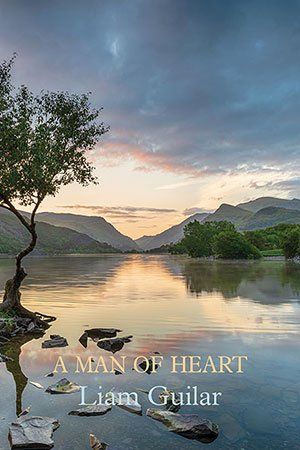
Review of A Man of Heart by Liam Guilar


A Man of Heart is reviewed in the December print edition of Quadrant. The text of the review is on line, you can read it by clicking on the link at the bottom of the page, which will open a new window. 


Heart of the Island Nation

 ..'.a celebration of long-neglected narrative traditions – an epic for an era which ironizes everything, a tribute to this once and future island and its stoically enduring people.'

...Guilar tells of Vortigern, king (fl. ca. 425-450) of the newly independent Britons who, according to traditional historiography, used the Saxon leaders Hengist and Horsa to protect his kingdom against Picts and Scots, and granted them land. Vortigern has been mythologised, but here feels eminently real, thanks to the poet’s sweeping historical sense, and convincingly gritty detail of how those long-lost landscapes must have looked, how those nation-building lives might really have felt.

...We open in shadows suited to descending ‘Dark Ages’, as kingdoms fade into view, and a strategic marriage is being considered sadly in a crepuscular columned room:

“There was never enough light. / Even in summer, shade / and shadows contour brightness. / At night, torches and lamps / shiver the edge of sight.”

A Romano-British matron is thinking of her daughter courted by unrefined “men of power” – regrettably necessary allies in a province turned upside down, where the uncivilized hold the sword-hand, and sophisticates overnight have only squatters’ rights.   

You can read the rest of the review by clicking on the link. It will take you to the author's page. 

Review of a Man of Heart

Liam Guilar - A Man of Heart

Wednesday, December 6, 2023

Michael Alexander.


Sad News. I heard today that Michael Alexander died last month. 

A translator of Old English, writer of one of the most judicious books on Ezra Pound, historian of literature and a fine poet in his own right. His interests ranged widely. There's a good book on Medievalism, a fine history of English Literature, and a book on Shakespeare that stands out amongst the flood of books on that subject as being both thoughtful and thought provoking. 

I bought this copy of Beowulf in 1976. I liked the cover. I knew nothing about Old English. 

But I was hooked. There was something strange and intriguing and I wanted to know what the original sounded like. It was one of the main reasons I studied medieval literature.  

Many years later, banging my head against Pound's Cantos I found his book The Poetic Achievement of Ezra Pound. He'd met the man, dedicated his Old English Translations to him 'without irony'. But his discussion of Pound's Seafarer is the most level headed I've read. 

Even more years later, when Pn Review published my version of 'Wulf and Eadwacer' in the same edition Michael was remembering his meeting with Pound,  I thanked the editor and told him that I owed  my interest in Medieval Literature to Michael's translations. The email was passed on, a correspondence followed. 

I was the awkward school boy staring at that Penguin book in W.H.Smith's in Coventry trying not to write fan letters.  He was generous with his time. Stories about meeting Pound, and David Jones. Links in the chain. 

When he read A Presentment of Englishry he was complimentary, but he also wrote; 'It wasn't all plague rape and pillage'. He was right. There's a poem in A Man of Heart called 'These are the good old days #1' which begins 'There must have been sunshine./  Good days when a man unbent from his work/ and smiled to see the healthy children play'. Originally 'For Michael Alexander' I removed the dedication, thinking the piece wasn't good enough. I wish I hadn't. 

It's strange the debts I owe to strangers. Sometimes I'm given the chance to thank them.


Safe travelling.


Tuesday, October 10, 2023

Review of Taliesin Origins by Dr. Gwilym Morris-Baird


Taliesin Origins by Dr. Gwilym Morris-Baird

Wales can boast one of the finest literary traditions in the world and in the poetic tradition of Wales, Taliesin is a vital figure. There are, intriguingly, two ‘Taliesins’. 


The first is an historical character. A Briton who (?Probably?) was a court bard in ‘The Old North’,  during the sixth century AD. He composed praise poems for ‘kings’ like Urien Rheged and was well-rewarded for his songs. 


There is a second Taliesin, who is a character in a legendary tale. He benefits from a concoction in a magic cauldron and having been pursued by its irate owner, through several animal transformations, is finally eaten as a grain and born again to become the greatest of poets.


In the long Welsh tradition, it seems that ‘being Taliesin’ became a persona that later bards could adopt. The poems were memorised, recited and passed on. The poems associated with this practice tend to be 'visionary' and for a modern reader often baffling.  Poems like 'Armes 

Prydein' or 'Cad Goddeu' remain obscure even after they have been 'explained'. 


Scholars have tried to separate the ‘Historic’ from the ‘Legendary poems’ in an attempt to see what the historical poet may have composed. Not everyone agrees on the selection but they do agree the Historic ones are few. They do however contain gems like 'Marwnat Owein';  the great lament for Owein Rheged which is not only a great lament, but a master class in metrical finesse. 


There’s not much that can be said about the Historical Figure, though the book gives a good introduction both to him and his context. Morus-Baird’s focus is the story or stories that survive about the legendary Taliesin. In an eloquently written exploration of the myth, he reads the symbolism of the stories to establish links to other stories, and to older and wider themes in a broadly ‘Celtic’ history. 


He knows that interpretation, especially interpretation of myth, legend and folklore is an art, not a science, but he is too well-informed and too sane to drift off into the twinkly-eyed excesses of others. 


Reading discussions of medieval literature and folk lore, it often feels like being a passenger on a tour bus in a foreign country. Too often the tour bus arrives at a junction and the obvious progression is to go right. You can see the Hill of Tara which is where you thought you were going. The bus goes left. 


This happens far too often, and the reader becomes mired in the kind of arguments that C.S.Lewis mocked as: ‘Apollo was a Sun God. He rode in a chariot. Cuchulainn rides in a chariot. Therefore Cuchulainn was a sun god.” At which point you get off the bus, hike back to the intersection and wait for someone going in the right direction.


This never happened for me with Morus-Baird’s book. The tour guide is eloquent, entertaining, and obviously very well-informed. When the argument arrives at the intersection, he may go left, but you will be glad he did, because he will take you to places you hadn’t considered and while objections will occur to any reader, he always stays within the grounds of possibility and is very explicit about when he is speculating or stretching a point. 


The writing navigates a territory whose boundaries are mapped by the meticulous linguistic arguments of cautious scholar and the wishful thinking of the ill-informed. As such it’s very valuable not least because it's readable. He cares about his subject. Part of his argument is that the Taliesin tradition is built into the Welsh Language, and therefore its diffusion and perpetuation are essential parts of a thriving Welsh culture. 


This might sound like niche marketing, but the ‘Taliesin tradition’ has a lot to offer anyone; especially those interested in folklore, or interested in one of Medieval Europe’s great poets.  

Hopefully before the next Robert Graves blunders around in that tradition, he or she will have read this book.  


(My only criticism of this book is its lack of an index.)